
6 Days Umbwe Route Mount Kilimanjaro
DAY 1: UMBWE GATE – UMBWE CAMP
Your Kilimanjaro adventure begins with a drive from Moshi to the Umbwe Gate. After completing the necessary park registration and preparations, the trek begins along a trail passing through rural farmland, coffee plantations, and banana-growing areas.
The path gradually enters the dense tropical forest, where the vegetation becomes thicker and the surroundings quieter. The trail follows a narrow ridge between two valleys and becomes progressively steeper as you gain altitude. After several hours of hiking beneath the forest canopy, you arrive at Umbwe Camp, where you will spend your first night on the mountain.

- Starting Elevation: 5,249 ft (1,600 m)
- Camp Elevation: 9,514 ft (2,900 m)
- Distance: Approximately 11 km / 7 miles
- Trekking Time: 5–7 hours
- Terrain/Zone: Montane Forest / Heath
DAY 2: UMBWE CAMP – BARRANCO CAMP
After breakfast, the trail continues upward and the landscape begins to change dramatically. The dense forest gives way to open moorland, with twisted trees, moss, and hardy mountain vegetation appearing along the route.
As you gain height, the views become more expansive, providing opportunities to see the higher slopes of Kilimanjaro. The trail eventually reaches the dramatic Barranco area, where the landscape opens into a broad valley surrounded by towering volcanic formations.
You will descend slightly into the Barranco Valley before reaching Barranco Camp, your overnight destination.
- Starting Elevation: 9,514 ft (2,900 m)
- Camp Elevation: 13,044 ft (3,970 m)
- Distance: Approximately 6 km / 4 miles
- Trekking Time: 4–5 hours
- Terrain/Zone: Heath / Moorland

DAY 3: BARRANCO CAMP – KARANGA CAMP
Today begins with one of the most recognizable sections of the Kilimanjaro climb: the ascent of the Barranco Wall. After leaving camp, you make your way down toward the base of the wall before beginning the steep climb.
Although the Barranco Wall is not a technical climbing section, it requires careful footing and some use of your hands as you negotiate the rocky trail. Once above the wall, the route crosses a series of ridges and valleys before descending into the Karanga Valley.
A final uphill section brings you to Karanga Camp. This relatively short trekking day provides valuable time for acclimatization before the route climbs higher toward Barafu.
- Starting Elevation: 13,044 ft (3,970 m)
- Camp Elevation: 13,106 ft (3,995 m)
- Distance: Approximately 5 km / 3 miles
- Trekking Time: 4–5 hours
- Terrain/Zone: Alpine Desert
DAY 4: KARANGA CAMP – BARAFU CAMP
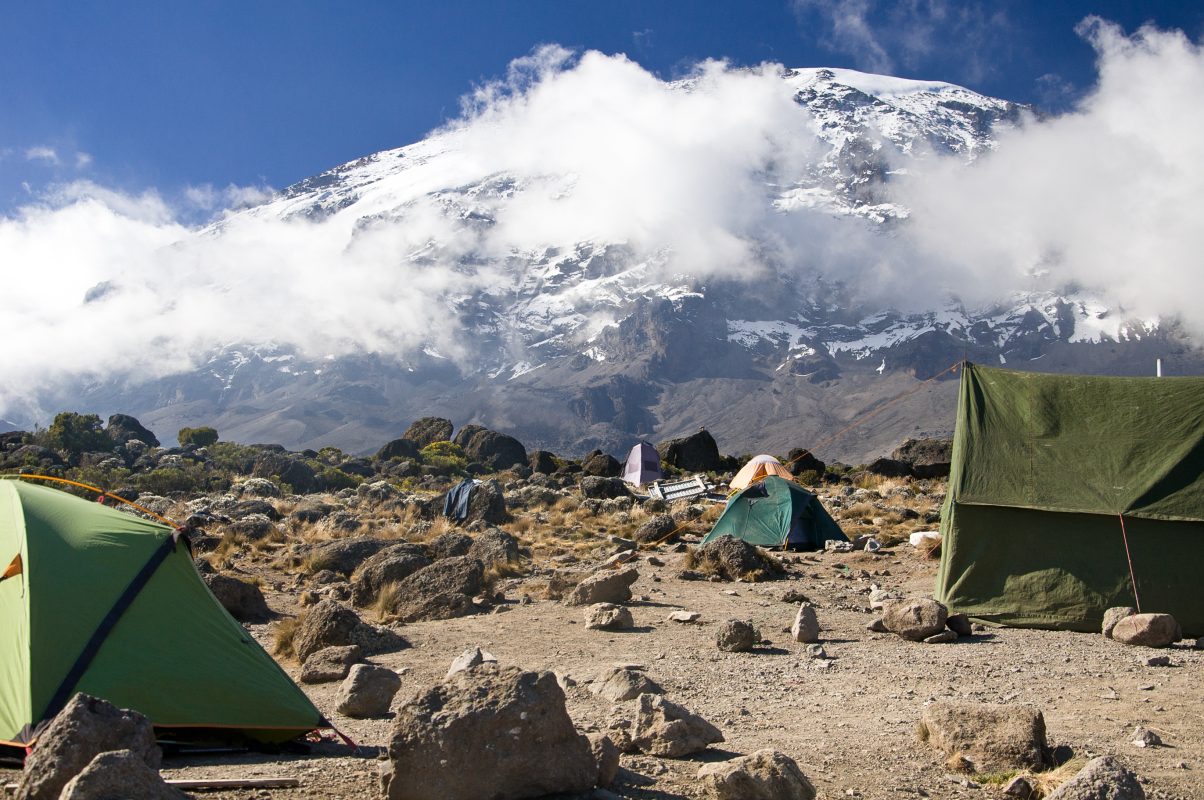
Following breakfast, you leave Karanga Camp and continue along the upper slopes toward the Barafu area. The landscape becomes increasingly dry and rocky as you approach the high-altitude alpine desert.
The route eventually joins the Mweka descent trail before continuing toward Barafu Camp. With the summit now clearly ahead, this is an important stage of the climb.
Upon reaching Barafu Camp, the remainder of the afternoon is dedicated to resting, hydrating, eating, and preparing your equipment for the summit attempt. You will have an early dinner and aim to get some sleep before beginning the summit climb around midnight.
- Weather permitting, the camp offers impressive views toward both Mawenzi and Kibo.
- Starting Elevation: 13,106 ft (3,995 m)
- Camp Elevation: 15,331 ft (4,673 m)
- Distance: Approximately 4 km / 2 miles
- Trekking Time: 4–5 hours
- Terrain/Zone: Alpine Desert
DAY 5: BARAFU CAMP – UHURU PEAK – MWEKA CAMP
The summit day begins during the night, usually around midnight. After a light meal and final preparations, you start climbing in darkness toward the crater rim.
The ascent is slow and steady, with frequent short breaks to manage the demanding altitude. The trail is steep in places, and the cold temperatures and reduced oxygen make this the most strenuous section of the expedition.
As the sky begins to brighten, you approach Stella Point on the crater rim. From here, you continue around the rim toward Uhuru Peak. Reaching 5,895 m (19,341 ft) marks the highest point of Mount Kilimanjaro and the African continent.
After spending some time at the summit, you begin the long descent toward Barafu Camp. A short recovery break and meal are followed by the continuation down the mountain toward Mweka Camp.
The descent through loose volcanic terrain can be demanding, particularly after the summit effort. Once you reach Mweka Camp, you can enjoy a well-deserved dinner and rest.
- Starting Elevation: 15,331 ft (4,673 m)
- Summit Elevation: 19,341 ft (5,895 m)
- Mweka Camp Elevation: 10,065 ft (3,067 m)
- Distance: Approximately 17 km / 10 miles
- Trekking Time: 11–14 hours
- Terrain/Zone: Arctic / Alpine Desert / Rainforest
- Meals: Breakfast, Lunch & Dinner
DAY 6: MWEKA CAMP – MWEKA GATE – MOSHI
Your final morning on Kilimanjaro begins with breakfast before starting the descent through the lush rainforest. The trail becomes greener and wetter as you lose altitude, and sections may be muddy depending on the weather.
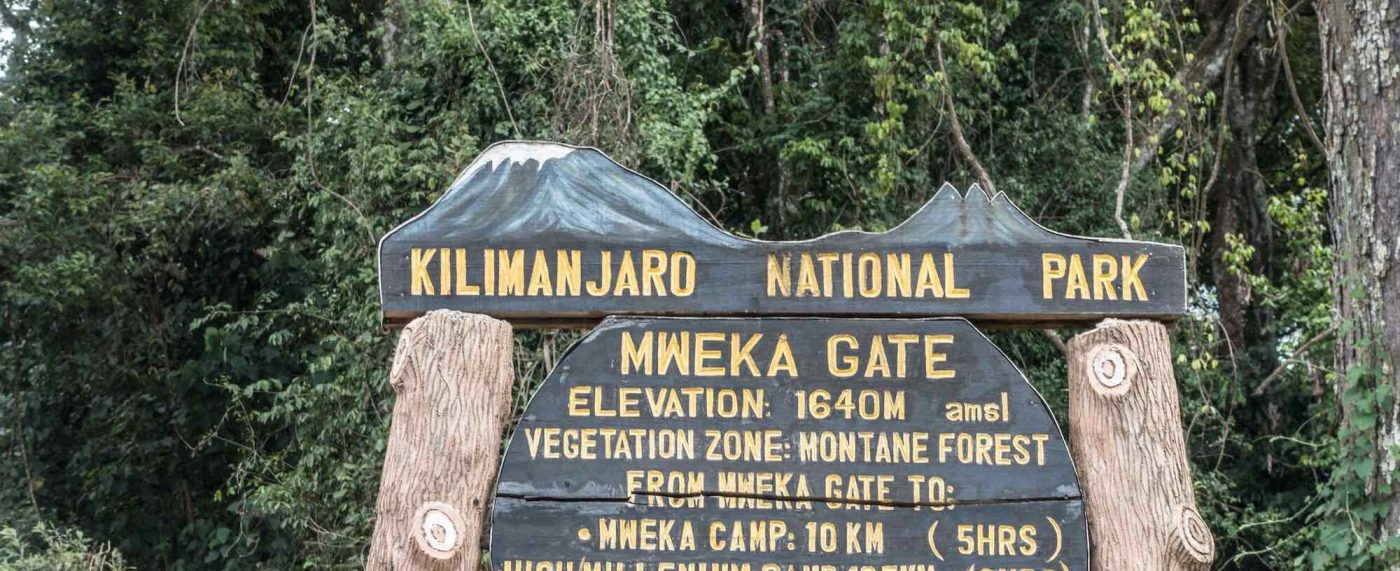
After several hours, you arrive at Mweka Gate, where the trek officially comes to an end. Once park formalities are completed, you can collect your summit certificate and celebrate the completion of your Kilimanjaro climb.
From the gate, you will continue to Mweka Village, where your transfer vehicle will meet you. You will then be driven back to your hotel in Moshi for a well-earned shower, relaxation, and overnight stay.
- Starting Elevation: 10,065 ft (3,067 m)
- Mweka Gate Elevation: 5,380 ft (1,640 m)
- Distance: Approximately 10 km / 6 miles
- Trekking Time: 3–4 hours
- Terrain/Zone: Rainforest
- Meals: Breakfast
- Accommodation: Hotel in Moshi
- Trek Ends: Mweka Gate