
Tallest Mountains in The World
Tallest Mountains in The World, Mountains are immense formations dominating the landscape, poised for exploration. Which mountains are considered the tallest in the world? The determination of that may depend on the method employed to measure a mountain. The ultimate measurement may rely on one of three specific metrics. The three mountains are the tallest according to three units of measurement specified on Geology.com.
Mauna Kea’s elevation from base to peak exceeds that of Mt. Everest, earning it the designation of the tallest mountain. The elevation is 4207 meters above sea level, whereas the total height from the base to the summit is 10,203 meters or 33,476 feet.
Mountains are mostly classified by height relative to sea level, though they can also be assessed from the Earth’s core. We will evaluate how these measures compare and alter our understanding of the world’s biggest mountains.
Mauna Kea, the tallest mountain from base to summit, surpasses Everest.
Mauna Kea is arguably the tallest summit in the world. Mauna Kea extends well beyond its surface. Mauna Kea is a mountainous island, with its base measured from below sea level to its summit. This dormant volcano is situated in North Central Hawaii on the Big Island and is encompassed inside a forest preserve.
The apex reaches an elevation of 13,796 feet or 4,207 meters above sea level; nevertheless, when assessed from base to top, it exceeds 10,000 meters. This designates Mauna Kea as the highest mountain summit in the world, in technical terms.
Mauna Kea translates to “White Mountain,” and it is also referred to as “Mauna O’ Wakea.” Mauna Kea holds significant significance for the Hawaiians and serves as the abode of their deity Wakea. This sacred mountain serves as a link for the indigenous people to their origins and deities. It is said to be the abode of both the celestial deities and their forefathers. It is the location where the “Sky Father” and “Earth Mother” converge. This property serves as a revered burial site for esteemed chiefs and clerics.
Mauna Kea differs from typical mountains as it comprises numerous volcanic cinder cones. Mauna Kea is readily accessible for anybody seeking to ascend. Unlike numerous other mountain trips, no substantial mountaineering equipment is required; it resembles hiking more closely. Commence your ascent from the Ellison Onizuka Visitor Center and proceed along the Mauna Kea trail, also referred to as the Humuula Trail.
Ten Highest Mountains in the World by Elevation
Mountains are assessed in several manners, with altitude being the most prevalent method. Altitude quantifies the highest point relative to sea level. Mountains are frequently remeasured over time due to the continuous movement of the Earth’s tectonic plates, which also alters mountain forms. Contemporary technology enables the measurement of mountains with GPS and satellites. In each analysis, the mountains enumerated continue to rank among the top 10 highest altitudes to date. Presented here is the chart of the tallest mountains in the world, measured above sea level.
Top Ten Tallest Mountains in The World According to Altitude |
||||
|
Rank
|
Mountain
|
Height meters
|
Height feet
|
Location
|
| 1 | Mt. Everest | 8,848 m | 29,031.7 ft | Nepal, China |
| 2 | K2 | 8,611 m | 28,251 ft | Pakistan & China |
| 3 | Kangchenjunga | 8,586 m | 28,169 ft | Nepal & India |
| 4 | Lhotse | 8,516 m | 27,940 ft | Nepal & China |
| 5 | Makalu | 8,485 m | 27,838 ft | Nepal & China |
| 6 | Cho Oyu | 8,818 m | 26,864 ft | Nepal & China |
| 7 | Dhaulagiri I | 8,167m | 26,795 ft | Nepal |
| 8 | Manaslu | 8,163m | 26,781 ft | Nepal |
| 9 | Nanga Parbat | 8,126 m | 26,660 ft | Pakistan |
| 10 | Annapurna I | 8,126 m | 26,510 | Nepal |
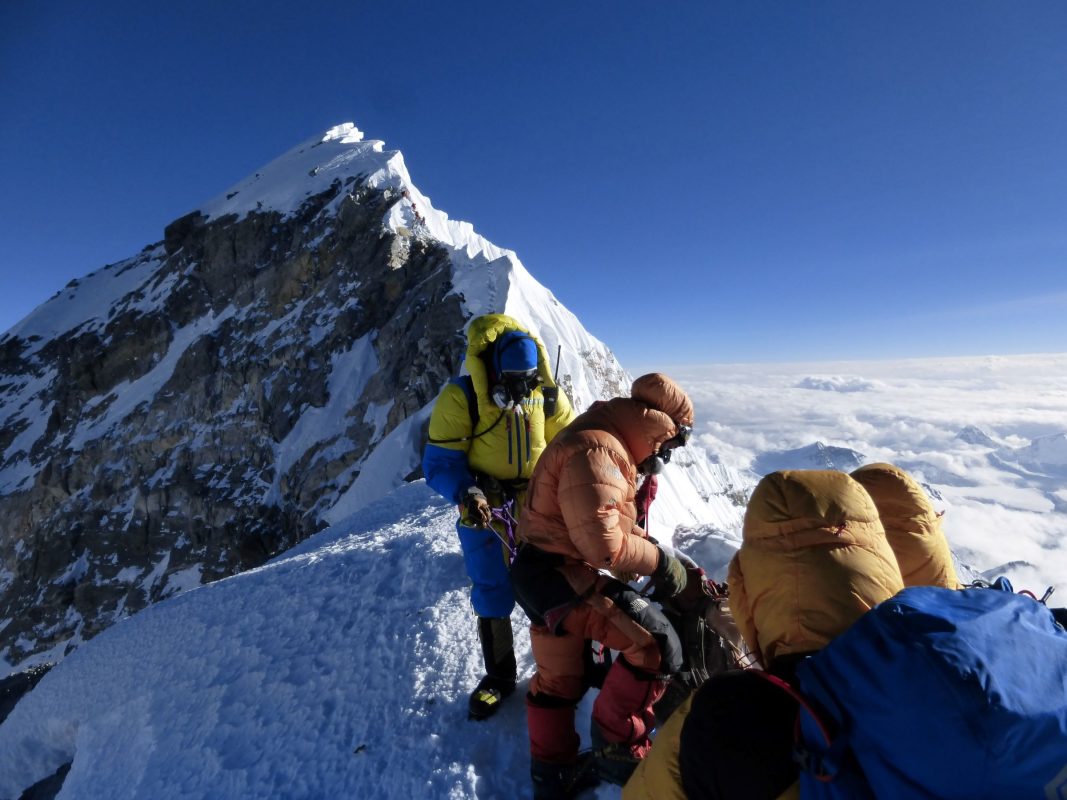
1. Mount Everest Holds the Distinction of Being the Highest Peak Above Sea Level
Mount Everest extends across Nepal, China, and the Tibetan border in southern Asia. Mount Everest has a height of 8,848.86 meters or 29,031.7 feet. Everest is a component of the Himalayan Mountains, which has several of the tallest peaks on Earth above sea level.
Local Tibetans refer to Everest as Chomolungma, meaning “Goddess of the World or of the Valley.” Sanskrit refers to it as the “Peak of Heaven.” It was officially designated as the highest summit in 1852. Remarkably, Everest continues to ascend, as tectonic plates elevate it little higher towards the heavens each year.
Numerous mountaineering aficionados have endeavored to ascend Mt. Everest, although more than 300 individuals have perished in their attempts to conquer this renowned and perilous peak. The inaugural ascent of Mt. Everest occurred in 1953, accomplished by Sir Edmund Hillary and Tenzing Norgay. They topped the peak at 29,035 feet and were designated the first individuals to stand upon the world’s tallest mountain of the 1900s.
Wind speeds can attain 200 km/h, and temperatures are conducive to frostbite or more severe conditions. Oxygen becomes increasingly sparse at higher altitudes, and survival is impossible without it. Despite carrying air tanks, numerous individuals never descended the mountain. It is preferable to appreciate the peak from a lower vantage point.
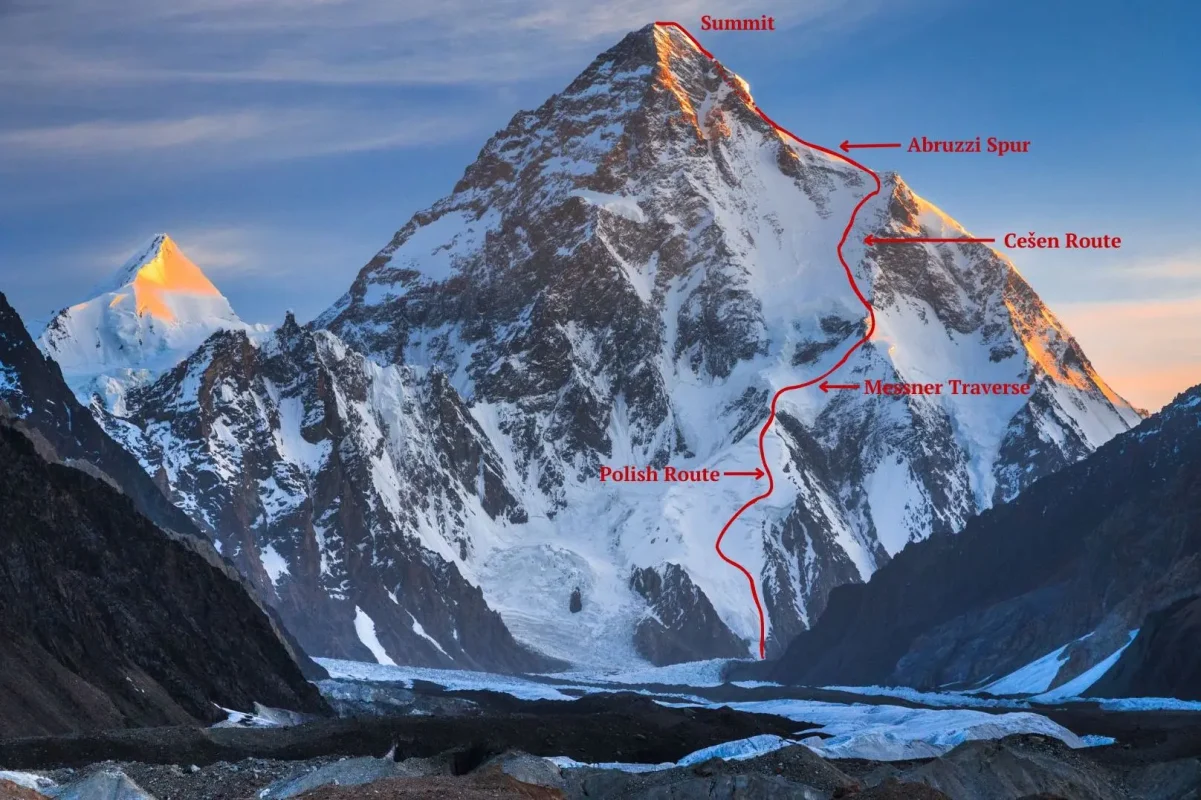
2. K2 Mountain is the second highest mountain in the world.
K2, commonly referred to as Qogir Feng or Mount Godwin Austen, is named after its initial surveyor, the English geographer Colonel H.H. Godwin Austen. K2 is the second highest mountain globally, with an elevation of 28,252 feet or 8,611 meters above sea level.
K2 is the second highest peak in the Karakoram Mountains and is the tallest of the two. This is the reason it is designated K2. The Karakoram Mountain range is situated in Pakistan and extends into the Kashmir area of China.
The inhabitants designate it as “Dapsang” and may alternatively refer to it as “Chogori.” The mountain is brutal and perilous, susceptible to intense storms, rendering it nearly impossible to ascend; yet, ascents have occurred, albeit with significant casualties. One individual fails to reach the summit for every four climbers.
 3. Kanchenjunga, the Himalayan rock giant, is the third tallest mountain in the world.
Kangchenjunga is one of the colossal, towering peaks in the Himalayas, where Everest is located. Kangchenjunga has an elevation of 8,586 meters or 28,169 feet.
Despite its lengthy designation, this is a concise rendition of the name Khangchendzonga. The designation signifies “The five treasures of the lofty snow.” The indigenous Lhopro community has the belief that these concealed resources manifest to the faithful during times of great necessity. It is additionally the legendary abode of the Yeti, referred to as the “Kanchenjunga devil.”
Kanchenjunga is among the most challenging mountains to ascend and attracts fewer climbers than adjacent peaks. Owing to the arduous nature and duration of the expedition, Kanchenjunga generally restricts the number of climbers annually to less than 34.
4. Lhotse is the southern peak and the fourth highest mountain in the world.
Lhotse is the fourth highest mountain in the world, with an elevation of 8,516 meters (27,940 feet) above sea level. Lhoste is situated in China, adjacent to the borders of Nepal and Tibet, and belongs to the same mountain range as the renowned Mt. Everest. Lhotse translates to “South Peak” in Tibetan.
It is the section of the South Col that links to Everest. Lhotse comprises two subsidiary summits: Lhotse Middle, located to the east, which stands at 8,414 meters (27,605 feet), and Lhotse Shar, which measures 8,383 meters (27,503 feet).
Lhoste is ascensible and is frequently seen as a precursor to climbing Everest. Although it may not be as challenging as Everest, it is a steep ascent and is more arduous to scale than Cho Oyu. Ascents of Lhotse are increasing in popularity because to its lower congestion and reduced expedition costs relative to adjacent summits.
5. Makalu Mountain is named after a Hindu deity and is the fifth tallest mountain in the world.
Makalu is the fifth highest mountain above sea level, at 8,485 meters (27,838 feet), situated in the Mahalangur region of the Himalayas in northeastern Nepal and south-central Tibet, China. Makalu is situated immediately east of Everest. Makalu is more secluded and is distinguished by its four-sided, pyramid-like faces.
The mountain is renowned for its precipitous ridges and is regarded as one of the most arduous ascents. Situated beneath the peak is the Makalu-Barun Valley, a glacial valley inside the Makalu National Park in the Himalayas. The valley is replete with stunning beauty, featuring gushing waterfalls and profound canyons encircled by verdant woods beneath the snow-capped peaks above.
6. Cho Oyu, the sixth highest mountain in the world
Cho Oyu is the sixth highest mountain globally, with an elevation of 8,188 meters (26,864 feet) above sea level. This is another significant creation of the formidable Himalayas, situated on the western side of the Khumba (Everest) region.
Cho Oyu translates to “turquoise Goddess” in Tibetan. Cho Oyu is regarded as a more accessible mountain to ascend and is comparatively safer than other formidable peaks in the area. A standard ascent of Cho Oyu may need as much as six weeks.
7. Dhaulagiri I, part of the Himalayan mountain range, is the seventh tallest mountain in the world.
Dhaulagiri is the seventh highest peak globally, with an elevation of 8,167 meters (26,795 feet), and is a notable feature of the Himalayas. Dhaulagiri is entirely contained within the borders of Nepal, unlike many other Himalayan peaks that span many countries.
Dhaulagiri originates from the Sanskrit term “dhawala giri,” meaning “dazzling or beautiful white mountain.” Dhaulagiri is the apex of the Gandaki River Basin. The Gandaki River descends below.
Dhaulagiri is notable for being a folded mountain, built by the convergence of two tectonic plates that have created this geological structure.
Dhaulagiri I presents greater climbing challenges, however has recorded over 500 successful ascents since its inaugural ascent in the 1960s, along with more than 30 fatalities.
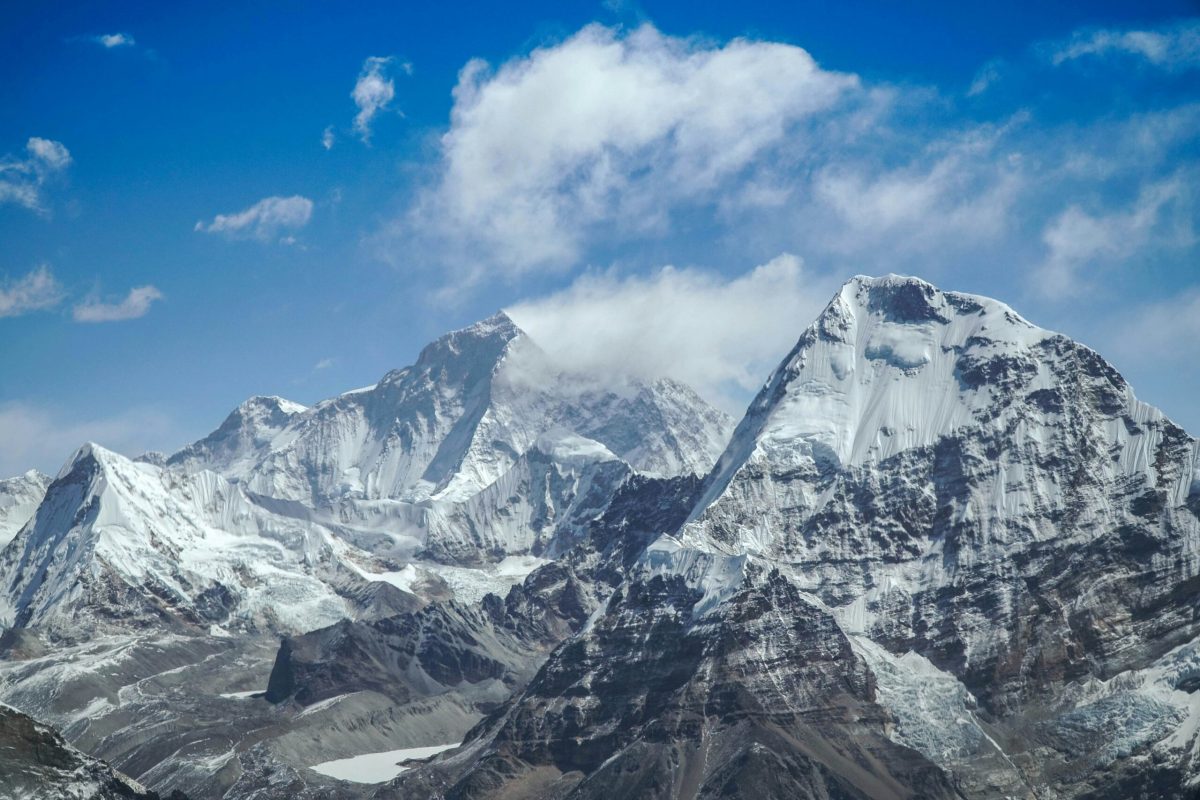
8. Manaslu Mountain is the eighth tallest in the world.
Manaslu is the eighth highest mountain above sea level. Manaslu has an elevation of 8,163 meters, equivalent to 26,781 feet. It is part of the Mansiri Himal within the western Nepalese Himalayas. Manaslu originates from the Sanskrit term “manasa” (spirit), thus referred to as the “mountain of the spirit.”
This formidable mountain is the tallest peak in the Gorkha District of Nepal. From a distance, Manaslu seems as a vertical expanse of snow and ice suspended in the atmosphere.
Although Manaslu Mountain is less perilous than its adjacent peaks, it is nevertheless regarded as a hazardous expedition. More than 60 individuals have perished while attempting to ascend the mountain, leading locals to refer to it as the “killer mountain.” Aspiring climbers frequently endeavor to ascend this mountain as preparation for the more formidable and perilous Mt. Everest.
9. Nanga Parbat, part of the Himalayan mountain range, is the ninth tallest peak.
The ninth tallest mountain peak, measuring 8,126 meters or 26,660 feet above sea level. It is situated in the Damer District of Gilgit-Baltistan, Pakistan, within the western Himalayas.
The term Nanga Parbat translates to “Naked Mountain,” derived from the Sanskrit terms “Nanga” and “Prava,” but the Tibetan appellation (Diamer) “Huge Mountain” is more often recognized.
Nanga Parbat looms over Fairy Meadows, also referred to as “Joot” National Park. It has been designated a “Killer Mountain” owing to the numerous fatalities incurred while attempting to ascend the mountain.
10. Annapurna in Nepal is the tenth highest mountain globally.
Annapurna is the tenth highest mountain, with an elevation of 8,091 meters or 26,545 feet. This magnificent peak is situated in the Himalayan range of Nepal.
The highest peak of Annapurna in the Himalayas exceeds 8000 meters and is comprised of numerous smaller peaks that constitute the massif. Annapurna, derived from Sanskrit, translates to “the provider of sustenance and nourishment.”
Annapurna encompasses a distinctive region known as the Annapurna Sanctuary, a high basin. The Annapurna sanctuary is an elevated glacial basin encircled by a mountain range. This refuge encompasses several ecosystems, including a jungle in one region and a drier, colder temperature in another.
It is replete with concealed natural treasures such as waterfalls, caves, and more features. The diversity of ecosystems in the Annapurna refuge is attributable to the restricted 7 hours of sunlight that penetrate the valley. The indigenous people regarded this location as highly sacred. The indigenous people regarded it as a sanctuary for their gods and a repository for valuables.
Since its inaugural ascent in the 1950s, Annapurna has been scaled by several individuals. The inaugural ascent was spearheaded by French native Maurice Herzog. The inaugural expedition attained the peak of Annapurna at 8,091 meters. Although more than 200 individuals have successfully summited Annapurna, around 54 climbers have not returned. Annapurna possesses the highest fatality-to-summit ratio. The ascent remains perilous and is advisable during the climbing season, which spans from October to May, as these months are optimal for avoiding the rainy period.
Ten Highest Mountains Measured from the Earth’s Core
When examining our compilation of the tallest mountains on Earth ranked from the planet’s center, the arrangement appears significantly altered. Several mountains appear on both lists; nevertheless, a notable revelation regarding this measurement method is that the renowned Mt. Everest ranks tenth, while Chimborazo occupies the top position.
Top Ten Tallest Mountains In The World by Height From the Earth’s Core |
||||
|
Mountain
|
Distance From the Core
|
Distance From the Core in Miles
|
Elevation Above Sea Level in Feet
|
Location
|
| Chimborazo | 6,384.4 K | 3,967.1 mi | 20,561 | Ecuador |
| Huascaran Mountain (Sur Summit) | 6,384.4 K | 3967.1 mi | 22205 ft | Peru |
| Yerupaja` | 6384.3 K | 3967.0 mi | 21834 | Peru |
| Cotopaxi | 6384.1 K | 3966.9 mi | 19347 | Ecuador |
| Huandoy | 6384.0 | 3966.8 mi | 20981 | Peru |
| Kilimanjaro | 6384.0 K | 3966.8 mi | 19341 | Tanzania |
| Cayambe | 6384.0 K | 3966.8 mi | 20981 | Ecuador |
| Antisana | 6383.9 K | 3966.8mi | 19341 | Ecuador |
| Siula Grande Mountain | 6383.8 K | 3966.7 mi | 19000 | Peru |
| Mount Everest | 6382.3 K | 3965.8 mi | 18875 | Nepal |
Chimborazo: The Highest Mountain Measured from the Earth’s Core
Chimborazo ranks first when measuring distance from the Earth’s center. Chimborazo is 6,384.4 kilometers, or 3,967.1 miles, from the Earth’s center, making it the highest point on Earth by this measurement. Chimborazo, situated in Ecuador, reaches an elevation of approximately 6,267 meters above sea level. It may also be regarded as the peak nearest to the moon.
What is the meaning of the name Chimborazo? The precise history and translation of Chimborazo remain unclear, although the name essentially conveys the meaning “the snow on the other side.” In the Chimbo language, the peak is referred to as the “Icethrone of God.”
Chimborazo is an inactive twin volcano rather than merely a mountain. Chimborazo is a stratovolcano, characterized by its steep slope and composed of numerous layers of hardened lava. The most distant location on the earth from the Earth’s core. The Earth is not a perfect sphere; it has an equatorial bulge, and this peak is situated near the equator, which imparts an additional dynamism to Chimborazo.
Chimborazo is regarded as a “rapid ascent” in comparison to other mountains. This is due to the absence of hiking required to attain the summit; it should only require approximately seven hours. Speed does not equate to simplicity and should not be underestimated. The predominant pathway to the peak is designated as El Castillo. Although Chimborazo was likely summited for years prior to the initial recorded ascent by locals, the first documented climb occurred in 1823. Joseph Goodrich, an American missionary, documented his ascent inside a single day.
Huascarán’s Sur Summit is the second highest mountain from the core.
Huascaran is the second highest peak globally, possessing the greatest distance from the Earth’s core. The Sur Summit is situated in the Yungay province of Peru and has an elevation of 6,384.4 meters or 3,967.1 miles from the Earth’s center. Situated beneath the mountain is the settlement of Huashco, which serves as the etymological origin for the mountain’s official designation.
The Huascaran Mountain comprises two summits, with the southern summit being the tallest and the northern peak being the lesser. The mountain summits are divided by Garganta, which is saddle-shaped, delineating the two peaks.
Yerupaja Mountain in Peru is the third most distant from the Earth’s core.
The renowned Andes mountains surpass mere cocoa. The Andes contain numerous lofty mountain summits. Yerupaja is one of the peaks and ranks as the third tallest mountain in the world from the Earth’s center. Yerupaja is 6,384.3 kilometers or 3,967.1 miles from the Earth’s core and approximately 6,635 meters above sea level. Yerupaja, situated in Peru, is a remarkable high summit within the Huayhuash mountain range of the Andes.
Few individuals have successfully ascended Yerupaja due to its challenging terrain; nonetheless, its allure continues to attract those courageous enough to tackle its slopes.
Cotopaxi Mountain is an active volcano.
Cotopaxi is an impressive peak located inside the plains of Cotopaxi National Park. Cotopaxi has a measurement of 6,384.1 kilometers or 3,966.9 miles from the Earth’s center. Cotopaxi is an active volcano in Ecuador, in contrast to Chimborazo. Since 1738, Cotopaxi has erupted more than 50 times and continues to assert its existence.
A crescent moon-shaped crater exists on Mount Cotopaxi. Cotopaxi translates to “neck moon” in the indigenous language. The inhabitants regarded this mountain as sacrosanct for generations, referring to it as the “rain sender.” The rain would guarantee a robust crop and abundant harvest for the inhabitants. For these individuals, it was a sanctuary inhabited by deities, so regarded with reverence rather than apprehension of eruption.
Huandoy Mountain: Fifth Tallest from the Earth’s Center
Huandoy Mountain ranks as the fifth tallest mountain as assessed from the Earth’s center. Huandoy has an elevation of 6,384.0 kilometers or 3,966.8 miles. This colossal rock formation is situated in Peru. This impressive peak is situated in Huascaran National Park and is part of the Andes mountain range. It is distinguished by its four peaks that bear a resemblance to a fireplace.
Mount Kilimanjaro, the Renowned Giant of Tanzania
Mount Kilimanjaro is the sixth tallest peak from the Earth’s core. This dormant volcano has an elevation of 5,895 meters (19,340 feet) and is situated in Africa. Kilimanjaro is exceedingly favored among adventurers due to its relative accessibility and ease of ascent compared to other peaks. Kilimanjaro is accessible for hikers of all skill levels, even novices. No advanced climbing equipment is required to ascend this colossal structure. However, due to its elevation, many individuals get altitude sickness, resulting in only approximately 50% of climbers reaching the top.
The inaugural ascent of Kilimanjaro was documented by a team of German geologists in 1889. It is presumed that locals ascended the renowned peak for years prior to the initial recorded ascent.
Kilimanjaro is distinctive not only due to its position squarely on the equator but also as the world’s tallest free-standing mountain. This indicates that it is not a component of a mountain range such as the Himalayas. The Swahili people refer to the peak as the “Mountain of Greatness.”
Cayambe is a prominent volcanic mountain located in Ecuador.
Cayambe is the seventh tallest mountain in the world when measured from the Earth’s core. Cayambe is not merely a mountain range; it is a volcano situated in the Pichincha Province of Ecuador. Cyambe has a measurement of 6,384.0 kilometers or 3,966.8 miles from the Earth’s center and is an impressive feature of the Andes. The Cayambe measures 5,790 meters above sea level.
Antisana is a volcanic mountain.
The Andes comprises numerous mountains and volcanoes. Antisana is one of the five volcanic mountain formations in the Andes of Ecuador. Although it is the fourth highest mountain in Ecuador, it is ranked eighth on our list of the tallest mountains from the Earth’s center. Antisana measures at 6383.9 kilometers or 3966.8 miles from the core and about 18, 875 ft above sea level.
Siula Grande in Peru
Siula is the ninth tallest mountain from Earth’s center, measuring 6,383.8 kilometers (3,966.7 miles) and 5,790 meters (19,000 feet) above sea level. Siula is a Peruvian mountain comprising two summits: Siula Grande (the larger) and Siula Chico (the smaller).
Siula Grande gained national attention when British mountaineers Joe Simpson and Simon Yates chronicled the survival narrative and climbing experience of a father and son. His 1989 publication was then adapted into a film titled “Touching the Void.”
Mount Everest is the tenth highest mountain.
Mount Everest in Nepal ranks tenth in terms of distance from the Earth’s center and is also the tenth farthest from the moon. Mount Everest is 6,382.3 kilometers or 3,965.8 miles from the Earth’s core. It is at an elevation of 8,848 meters or 29,029 feet above sea level. It has long been designated as the tallest peak on Earth; however, as measured from the Earth’s core, this designation is inaccurate.
Point of View or Measurement Means Everything
Traditionally, mountains have been assessed exclusively by their elevation above sea level; however, research has revealed that additional elements can influence the true height of a mountain. A mountain can be measured from its base to its top, which would render Mauna Kea the tallest mountain in the world. Conversely, when measured from the Earth’s core, Chimborazo is considered the tallest mountain due to its proximity to the moon.