Kilimanjaro Trail Conditions: What Trekkers Should Expect on the Mountain
Kilimanjaro Trail Conditions: What Trekkers Should Expect on the Mountain, Climbing Mount Kilimanjaro is not a technical mountaineering expedition, but it is still a serious high-altitude trek where trail conditions change dramatically with elevation, weather, and route choice. Many climbers arrive expecting a simple hiking experience, only to discover that Kilimanjaro is a mountain of extremes—humid rainforest at the base, freezing arctic conditions at the summit, and everything in between. Understanding trail conditions is one of the most important parts of preparing for a successful ascent.

Unlike many trekking destinations where conditions remain relatively consistent, Kilimanjaro compresses multiple climate zones into a single climb. As you move upward, the terrain, temperature, and oxygen levels shift rapidly. This means the “difficulty” of the trail is not just about steepness or distance, but about how your body adapts to an environment that becomes progressively harsher each day.
Rainforest Zone: Mud, Roots, and High Humidity
Most Kilimanjaro routes begin in the lower rainforest zone, which is lush, green, and often humid. The track is typically soft underfoot in this area, with exposed roots, dense vegetation, and sporadic muddy patches, particularly after a downpour.
The biggest challenge in this section is not altitude but footing. Trails can become slippery, and hikers often need to watch every step to avoid slipping on wet soil or moss-covered rocks. Rain is common, particularly in the wetter seasons, and ponchos or waterproof jackets are essential.
Despite the mud and humidity, this zone is one of the most beautiful parts of the climb. Birds, colobus monkeys, and dense tropical vegetation create an immersive jungle experience. However, trekkers should not be deceived by its relatively gentle appearance—the real challenge is still ahead.
Heather and Moorland Zone: Open Slopes and Strong Sun
As the trail ascends, the forest gives way to the heath and moorland zone. Vegetation becomes sparse, replaced by tall grasses, giant heathers, and strange high-altitude plants such as lobelias.
The terrain here becomes more open, and paths are usually clearer and less muddy than in the rainforest. However, exposure increases significantly. Sunlight is stronger at altitude, and there is less natural shade. At the same time, temperatures begin to drop noticeably, especially in the early morning and evening.
Wind also becomes a factor in this zone. While not extreme, gusts can make the trek feel colder and more demanding. Although the footing is mostly firm and dry, there are sporadic rocky areas and steady ascents that start to test stamina more than technical skill.
 Alpine Desert Zone: Harsh, Dry, and Thin Air
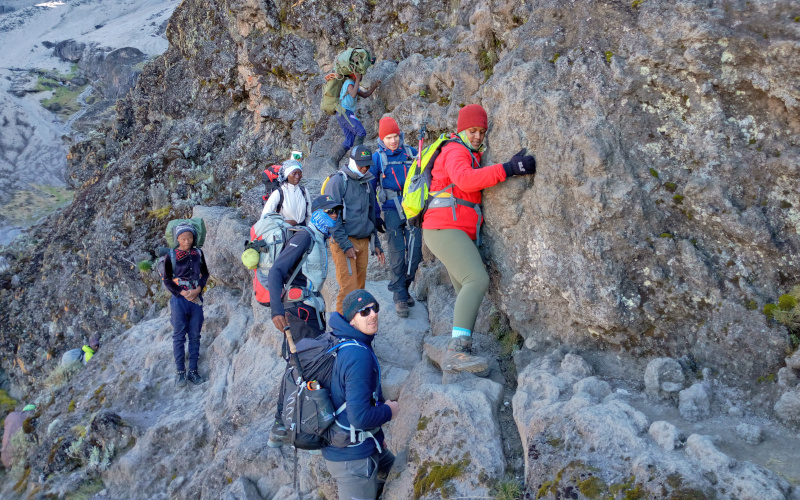
Beyond the moorland lies the alpine desert zone, one of the most visually striking but physically demanding sections of Mount Kilimanjaro. The landscape becomes barren, almost lunar in appearance. Vegetation is minimal, and the ground consists mainly of volcanic rock, gravel, and dust.
This is where altitude starts to seriously affect most trekkers. Oxygen levels drop significantly, and even moderate walking speeds can feel exhausting. The trails are often loose and dusty, making footing less stable, especially on downhill sections.
Temperature fluctuations are extreme. Days can be hot under direct sunlight, but nights are often freezing. The lack of vegetation means there is no shelter from wind, and climbers must rely entirely on layered clothing for protection.
Mental fatigue also becomes more noticeable in this zone. The landscape is repetitive and stark, which can make progress feel slower than it actually is. However, this section is crucial for acclimatization before the final ascent.
Summit Zone: Ice, Wind, and Extreme Cold
The summit zone is where Kilimanjaro reveals its most severe conditions. Climbers typically begin their final push to Uhuru Peak at night or very early morning to take advantage of firmer ground and more stable weather.
Temperatures here can drop far below freezing, often reaching -10°C to -20°C (14°F to -4°F) depending on conditions. Strong winds are common, and the air is extremely thin. Every step requires effort, and even simple movements can feel exhausting.
The trail itself is steep and consists of loose volcanic scree or frozen ground, depending on recent weather. In some areas, ice or snow may be present, making footing more challenging. Progress is slow and deliberate, often described as “pole pole” (slowly, slowly), a phrase guides frequently use to encourage steady pacing.
Despite the harsh conditions, this section is also the most emotionally powerful. The combination of sunrise views, glaciers, and the final approach to the summit creates an unforgettable atmosphere.
 Descent Conditions: Fast but Physically Straining
Descending Kilimanjaro is often underestimated. While gravity helps reduce effort, the downhill sections place significant strain on knees, ankles, and thighs Steep grades, loose gravel, and rough routes can make the downhill more taxing than the ascent.
Many trekkers report that their legs feel more fatigued during descent due to the constant impact on joints. Trekking poles become especially useful here, helping distribute weight and improve balance.
Weather conditions during descent can also shift quickly. Lower zones may be warm and humid again, while higher zones remain cold and windy. This rapid change requires flexible layering to avoid overheating or chilling.
How Different Routes Affect Trail Conditions
Trail conditions vary slightly depending on the route chosen. Some routes, like the western approaches, pass through more remote and less trafficked terrain, which can feel wilder and less maintained in places. Others, such as more popular routes, are better trodden and easier to follow but may feel crowded during peak seasons.
Longer routes generally offer better acclimatization, meaning climbers experience fewer severe symptoms of altitude sickness. Shorter routes expose trekkers to faster elevation gain, which makes trail conditions feel more intense and physically demanding.
Regardless of the route, however, all paths converge into similar high-altitude terrain near the upper zones, meaning summit conditions are largely consistent across the mountain.
Weather Variability and Seasonal Impact
Weather plays a major role in shaping trail conditions on Mount Kilimanjaro. There are two main climbing seasons: dry and wet.
During dry seasons, trails are generally more stable, with less mud in the lower zones and clearer summit conditions. However, dust can be more prevalent in alpine areas.
During wet seasons, rain can make forest trails slippery and increase difficulty in early stages. Cloud cover may also reduce visibility, especially in mid-altitude zones. However, fewer crowds and greener landscapes can make the experience more peaceful.
Sudden weather changes are common year-round, so climbers must always be prepared for multiple climate conditions within a single day.
Final Thoughts
Trail conditions on Kilimanjaro are defined by contrast. In a single journey, trekkers move through rainforest humidity, dry volcanic deserts, and icy summit winds. Each zone presents its own challenges, and success depends not only on fitness but also on preparation, pacing, and adaptability.
What makes the mountain remarkable is not just its height, but the rapid transformation of its environment. Understanding these conditions helps climbers set realistic expectations and respect the mountain’s natural complexity.
Climbing Mount Kilimanjaro is ultimately a test of endurance and awareness. Those who understand its trail conditions in advance are far more likely to reach the summit safely—and fully appreciate the extraordinary journey along the way.