Kilimanjaro Foods
Kilimanjaro Foods, You will hike Africa’s tallest peak, Kilimanjaro; nutrition that sustains you is a crucial component of your success in reaching the summit. What is essential for your sustenance during the ascent? Firstly, the food must be healthful. Kilimanjaro meals must be calorie-dense, with an appropriate combination of complex carbs, protein, and beneficial fats to support your elevated level of effort. Our menus are meticulously crafted to ensure optimal nutrition for your ascent, featuring three substantial meals daily, complemented by delectable trail snacks—these snacks include simple sugars that effectively provide an energy boost to sustain your efforts.
Fresh produce is cleansed with a universal sterilizer designed for food goods, as this method is the most effective for eliminating bacteria to ensure safe consumption. Consequently, we may securely offer salad and raw veggies on the mountain for a revitalizing source of fiber and nutrients.
A distinct dining tent is provided, offering food upon request at any time. The subsequent list comprises some menu items provided during meals on the Kilimanjaro Climb
Daily Sample Menus for Kilimanjaro
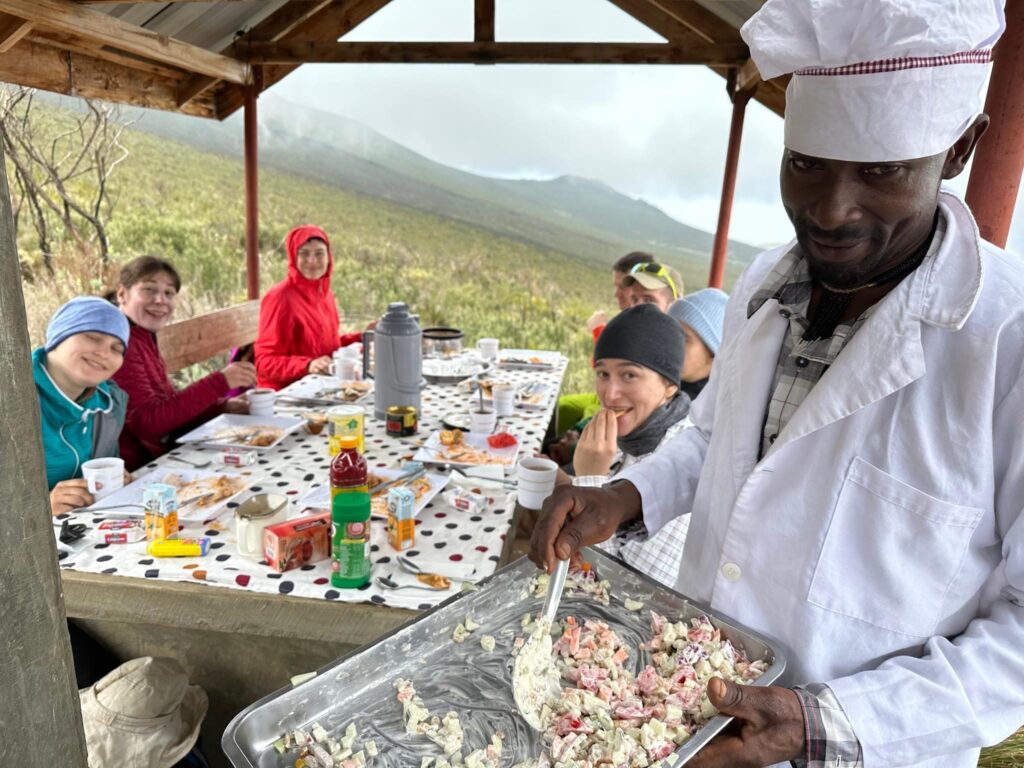
We possess a dining tent equipped with chairs just for dining purposes. During your Kilimanjaro ascent, you will be provided with various meals daily; the following is a guideline of the types of cuisine you can anticipate:
Breakfast typically consists of porridge, followed by sausage and eggs, toast with marmalade or jams, and hot beverages such as tea, coffee, or chocolate. Climbers are requested to inform the guide about their appetites; otherwise, we will likely err on the side of caution by supplying an excess of food.
Lunch often consists of a packed meal that you will transport in your daypack. It typically comprises a boiled egg, several sandwiches, a portion of chicken, fresh fruit, and a cold beverage. At the conclusion of the day’s trek, afternoon tea is provided alongside biscuits, peanuts, and, most notably, salted popcorn, accompanied by an abundance of hot beverages.
The dinner commences with soup, succeeded by a main course with chicken or meat, accompanied by a vegetable sauce, cabbage, and a choice of rice, pasta, or potatoes, concluding with fresh fruit for dessert.
Despite being distant from home, we acknowledge the importance of creature comforts; therefore, do not be astonished to see some of your preferred food brands, including Heinz, Nescafe, and Nestle!
We can accommodate all dietary restrictions; please inform us in advance. For stringent diets, we advise bringing your preferred “energy” foods, as certain specific ingredients may be difficult to obtain in Tanzania.
A prevalent consequence of altitude is diminished appetite. We provide appealing meals, abundant in beneficial carbs. The US Army Research Institute of Environmental Medicine states that “carbohydrate is the most efficient fuel for optimizing performance at altitude,” enhancing recovery and restoring muscle glycogen reserves for subsequent activities.
The study further states that “a high carbohydrate diet at altitude is advised as a measure to mitigate symptoms of AMS (acute mountain sickness)” due to its enhancement of ventilation and blood oxygenation.
Due to diminished hunger, carbohydrate-rich diets are frequently more appealing than those high in protein or fat, and altitude alters metabolic processes. The amalgamation of trail hours and your body’s acclimatization to altitude results in a significantly elevated energy consumption compared to your home environment.
Veteran hikers accustomed to consuming subpar dehydrated meals on the path frequently express astonishment at the quality and diversity of cuisine produced in our mountain kitchens. We exclusively utilize fresh vegetables, eschewing dried “ready meals,” and all food is transported up Mount Kilimanjaro by our porters.
Breakfast:
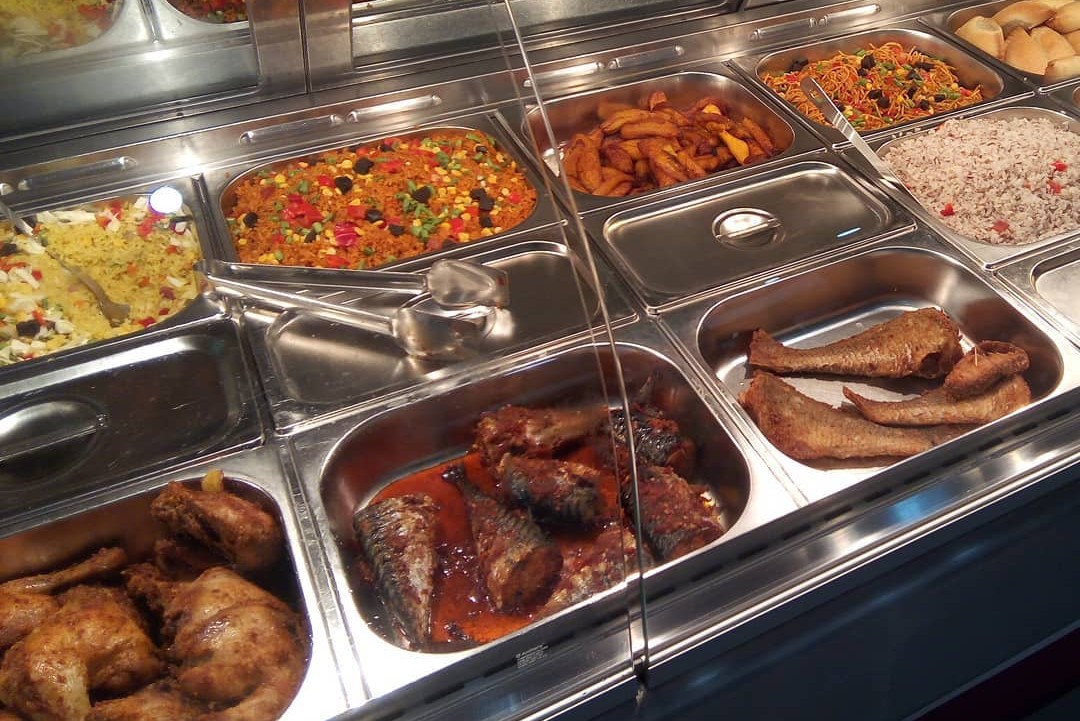
Tea or coffee, sliced fruit, scrambled eggs, bacon, porridge, handmade granola, toast, honey, and jam.
Trail Snacks:
A mixture of roasted cashews, peanuts, chocolate, and raisins. We additionally provide sugary confections that supply essential energy enhancements at elevated elevations. We dehydrate our own fruit (pineapple, mango, and banana), creating an ideal lightweight, nutritious, and delicious trail snack. Our artisanal granola and sun-dried tomatoes are also genuine favorites.
Picnic Lunch:
This is established along the trail at the midpoint of the day’s journey. Tea, coffee, hot cocoa, sandwiches, soup, guacamole, bell peppers, tomatoes, almond-date bars, nuts, fruit, sun-dried tomatoes, and cheese.
Dinner: Tomato ginger soup accompanied by baked bread, fresh fish served with chips, peas enhanced with butter and mint, avocado and tomato salad, and apple pie with cream. At elevated elevations, we consume a greater quantity of easily digestible starch-based foods, such as pasta with garlic bread, spaghetti Bolognese, cauliflower, carrots, brownies, and fruitcake. Following the ascent, we relish a lavish celebratory lunch sent fresh from our Arusha headquarters (envision warm chocolate cake)!
Drinking Water on Kilimanjaro
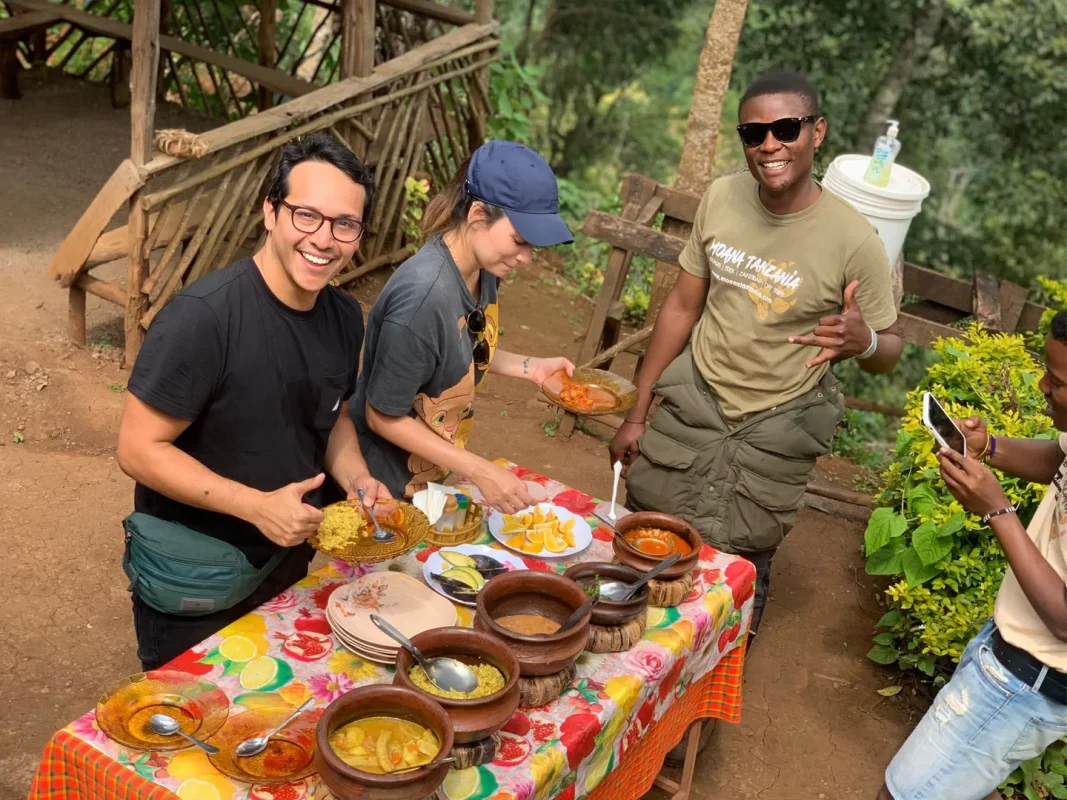
We supply our climbers with boiled, filtered, and cleaned water at all times. A primary contributor to gastrointestinal issues in Africa is the consumption of unclean water. We purify all our water, including that used for washing food and cooking.
Maintaining hydration is crucial for acclimatization. The arid atmosphere, physical exercise, and elevation can rapidly lead to dehydration; therefore, if you are using Diamox for acclimatization, it is essential to maintain adequate fluid intake.
What is the recommended water intake for climbing Kilimanjaro?
One should strive to consume approximately 3-4 liters of water daily. We advise incorporating an electrolyte mix into your water, along with flavoring drops if you consider plain water unappealing.
Each Kilimanjaro camp will provide tea, coffee, hot cocoa, squash, and fruit juices; sodas and bottled water will not be supplied.