Kilimanjaro vs Rwenzori Mountains | Which African Mountain Should You Climb?
Kilimanjaro Vs Rwenzori Mountain are premier trekking safari sites in East Africa. Tourists interested in ascending either mountain often struggle to choose which one to hike. This page provides a guide for climbing both summits to facilitate your decision-making process. The optimal method to determine which option is superior is to consult this information and visit both locations. Tourists possess varying preferences for activities that can be undertaken before or after mountain trekking, which significantly influence their choice of the optimal hiking experience.
 Mount Kilimanjaro
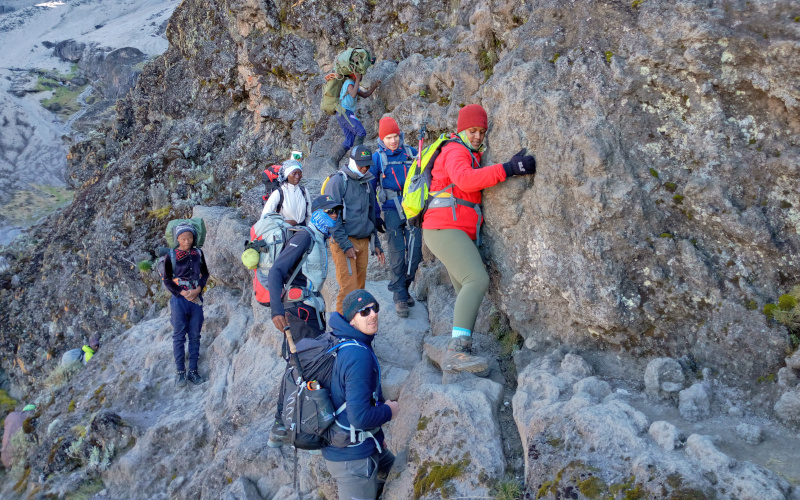
Mount Kilimanjaro is the tallest mountain in Africa, with its summit recognized as the continent’s highest point. Kilimanjaro is situated in northeastern Tanzania, adjacent to the Kenyan border, approximately 140 kilometers south of Nairobi. Mount Kilimanjaro features seven hiking paths to reach the summit, each possessing distinct advantages and disadvantages. Proper acclimatization is essential to undertake one of the seven hiking routes on Kilimanjaro for an enhanced experience.
The various trails utilized for ascending Mount Kilimanjaro comprise the Machame route, Umbwe route, Marangu route, Lemosho route, Rongai route, Northern Circuit route, and Shira route. The Rongai route is the most picturesque and accessible option, while the Lemosho and Northern Circuit routes are also commendable. The Marangu route is the oldest and uniquely features permanent dormitory-style accommodations. The Shira route presents some challenges, whereas the Machame route provides stunning vistas.
Tourists intending to ascend Mount Kilimanjaro must be aware that there are five climate zones prior to reaching the summit, and they should prepare for the variations in climatic conditions along the hike. The initial climatic zone comprises the lowland forest and the tropical montane. The lowlands are situated at altitudes of 1850 meters and 2800 meters. The second climatic zone consists of bushes at roughly 3000 meters, with a transition beginning at 4000 meters, characterized by a dry and stony climate akin to a lunar landscape. The fourth climatic zone is characterized by glacial and desert environments, which are partially snow-covered; nevertheless, the glaciers have been retreating over the years.
 Exemplary itineraries for trekking Mount Kilimanjaro
Below are some of the itineraries for the different routes used to get to the peak
Marangu route/Coca-Cola route
- Day 1: Marangu gate to Mandara hut (5 hour hike)
- Day 2: Mandara hut to Horombo hut (6 hours hike)
- Day 3: Horombo hut (for acclimatization however this can be skipped)
- Day 4: Horombo hut to Kibo hut (6 hours)
- Day 5: Kibo hut to Uhuru Peak (8 hours) and Uhuru Peak to Horombo hut (6 hours)
- Day 6: Horombo hut to Marangu gate (6 hours)
- Machame route/Whiskey route
- Day 1: Machame gate to Machame camp (4 to 6 hours)
- Day 2: Machame Camp to Shira Camp (6 hours)
- Day 3: Shira to Lava Tower to Barranco Camp (7 hours)
- Day 4: Barranco camp to Barafu Camp (7 hours and usually divided into two for proper acclimatization)
- Day 5: Barafu Camp to Uhuru peak (8 hours), Uhuru to Mweka camp (7 or 8 hours)
Lemosho
- Day 1: Londorossi to Mti Mkubwa (6-7 hours)
- Day 2: Mti Mkubwa to Shira 2 camp (6/7 hours)
- Day 3: Shira to Lava Tower to Barranco camp (7 hours)
- Day 4: Barranco Camp to Barafu Camp (7 hours)
- Day 5: Barafu camp to Uhuru Peak (8 hours), Uhuru Peak to Mweka camp (8 hours)
- Day 6: Descent to Mweka camp to Mweka gate (3 hours)
Rongai Route
- Day 1: Rongai gate to 1st caves camp (5 hours)
- Day 2: 1st cave to Kikelewa cave (6 to 7 hours)
- Day 3: Kikelewa Cave to Mawenzi Tarn camp (3 to 4 hours)
- Day 4: Mawenzi Tarn to Kibo hut (4-5 hours)
- Day 5: Kibo hut to Uhuru Peak (8 hours), Uhuru Peak to Horombo (6 hours)
- Day 6: Horombo hut to Marangu gate (6 hours)
Northern circuit route
- Day 1: Londorossi Gate to Mti Mkubwa camp (5-6 hours)
- Day 2: Mti Mkubwa to Shira Camp (3-4 hours)
- Day 3: Shira Camp 1 to Shira Camp 2 (5 to 6 hours)
- Day 4: Shira camp 2 to Lava tower to Moir camp (5-7 hours)
- Day 5: Moir camp to Buffalo camp (6 hours)
- Day 6: Buffalo camp to Rongai Third cave (6 hours)
- Day 7: 3rd Cave to School hut (5 hours)
- Day 8: School hut to Uhuru Peak to Millennium Camp (7 hours)
- Day 9: millennial camp to Mweka gate (5 hours)
Umbwe route
- Day 1: Umbwe gate to Umbwe cave camp (5-6 hours)
- Day 2: Umbwe cave to Barranco camp (4-6 hours)
- Day 3: Barranco camp to Karanga Camp (3-4 hours)
- Day 4: Karanga camp to Barafu camp (3-4 hours)
- Day 5: Barafu camp to Uhuru peak to Mweka camp (5-6 hours)
- Day 6: Mweka camp to Mweka gate (3-4 hours)
Rwenzori Mountains
Mount Rwenzori is one of the most remarkable mountains on the African continent and is a challenge for anyone lacking prior trekking experience. The Rwenzori Mountains were discovered by Stanley and span around 120 kilometers in length and 65 kilometers in width. The formation has six peaks: Mount Speke at 4890m, Mount Baker at 4843m, Mount Gessi at 4715m, Mount Luigi di Savoia at 4627m, Mount Emin at 4798m, and Mount Stanley at 5109m above sea level. The expeditions on Mount Rwenzori require 7 to 12 days to reach the summit and return.
Mount Rwenzori features various hiking paths to the peak, including the Kilembe Trail, the Central Circuit Trail, and the Bukurungu Wilderness Camping Trail.
The Central Circuit Trail is the most frequented path by both seasoned and novice hikers. It is the oldest trail on the mountain leading to the Margherita peak. The middle trail is the most accessible, traversing five distinct vegetation zones, valleys, gorges, and the rocky summit.
The Bukurungu trail is the latest addition, established subsequent to the Kilembe and Central circuit hiking trails. The Bukurungu trail features secure camping utilized by hikers, as there are no shelters available. It provides stunning vistas of the remarkable Bujuku and Irene lakes, as well as Mughuli and Bukurungu lakes, while simultaneously offering breathtaking scenery. The Bukurungu route requires 8 days to reach Margherita Peak.
The Kilembe Trail, commonly referred to as the Southern Circuit Route, is administered by Rwenzori Trekking Services. New huts have been erected along this route, which is the longest path on Mount Rwenzori, providing hikers sufficient time to acclimatize; the ascent to the peak will require 7 to 8 days.
On 14th May 2024, the Uganda Wildlife Authority declared a temporary halt of hiking activities to Margherita Peak due to the emergence of crevasses near the Margherita glacier. They have chosen to create a permanent ladder on the right side of the Margherita glacier, and this alternative is under consideration. Meanwhile, hikers are urged to investigate alternative summits of Mount Rwenzori.
Reasons to hike Kilimanjaro and Rwenzori climbing
Mount Kilimanjaro and Mount Rwenzori are snow-capped mountain ranges that provide tourists with an unforgettable hiking experience. These summits are deemed beginner-friendly; however, intermediate abilities are required to undertake the ascent. Kilimanjaro and Rwenzori provide stunning landscapes for trekkers and represent one of the most exhilarating safaris in East Africa.
Essential items to carry for a Kilimanjaro and Rwenzori hiking expedition
The packing list for the Kilimanjaro and Rwenzori climbs must be exact, ensuring that the clothing and supplies included are comfortable. The following is a compilation of items recommended for hiking on Rwenzori and Kilimanjaro.
Gardening gloves to safeguard your hands from the cold.
Insulated garments comprising sweaters, jackets, a scarf, and socks
First aid kit, long-sleeved shirts
Pants
A photographic device
Robust hiking boots
Impermeable raincoat
A water-resistant backpack
Light refreshments
A sunhat and sunglasses
A beanie or headgear to maintain warmth during frigid mornings and upon reaching the summit.
A neckwear accessory
Essential information for trekking on Kilimanjaro and Rwenzori
Selecting the optimal route: Mount Kilimanjaro and Rwenzori provide distinct trekking paths to the summit, necessitating a discussion with your guides over the most suitable route based on your preparedness, preferences, and physical health. Each method possesses distinct advantages and disadvantages, which must be understood prior to making an informed decision.
One must be mentally prepared and physically fit to successfully ascend both Mount Rwenzori and Kilimanjaro. Condition and prepare the entire body, particularly the legs, ankles, joints, and muscles, to prevent muscle strains during the hike.
Altitude sickness is a prevalent condition that impacts hikers throughout their ascent to the summit. Reaching the peak is not for the timid; as altitude increases, oxygen levels decrease, which can induce dizziness and compel some climbers to retreat. Altitude sickness can be managed, particularly by medication and the strategy of ascending high and resting low, which aids travelers in acclimatizing to altitude variations.
Lodging options while trekking Mount Rwenzori and Kilimanjaro.
Mount Kilimanjaro features seven hiking routes, each equipped with camps for trekkers, save for the Marangu path, which has permanent huts. The many camps on Mount Kilimanjaro are meticulously maintained, with porters and personnel consistently advancing to ensure that all arrangements, including tents, are prepared prior to the trekking team’s arrival.
Rwenzori Mountains: The various accommodations available along Mount Rwenzori include Nyabitaba Hut, John Matte Hut at 3505m, Bujuku Hut at 3962m, Elena Hut at 4023m, Kitandara Hut at 4023m, Guyeoman Hut at 3505m, Shine Hut at 2585m, Kalalama Camp at 314m, Kiharo Camp at 3460m, Mutinda Camp at 3688m, The Butawu at 3974m, Hunswick Camp at 3974m, Bugata Camp at 4062m, and Margherita Camp at 4485m.
Best time to mountain climbing on Mount Kilimanjaro and Rwenzori
Mountain climbing in the Rwenzori and Kilimanjaro regions is feasible year-round; however, the optimal periods for hiking are during the dry season, specifically from June to September and December to February.
June marks the transition from the rainy season to the dry season; while it is not entirely dry, it is generally drier than April and May. Be prepared for the colder temperatures at higher altitudes and remain aware that weather conditions can change unexpectedly, necessitating readiness for both rain and sun.
The months from July to October are optimal for mountain climbing on both Mount Kilimanjaro and Mount Rwenzori. This season is drier than the preceding months, yet there still a possibility of encountering rain, particularly while trekking through the moorlands and jungle. The sole drawback of trekking during these months is the increased crowds and higher costs associated with the period.
The rainy season commences in September and extends into November, continuing into early December. Clear skies are anticipated throughout this period; nevertheless, rainfall may occur at any time throughout the day. Hiking both mountains remains feasible; however, it is suboptimal due to potentially slippery, damp, and muddy trails.
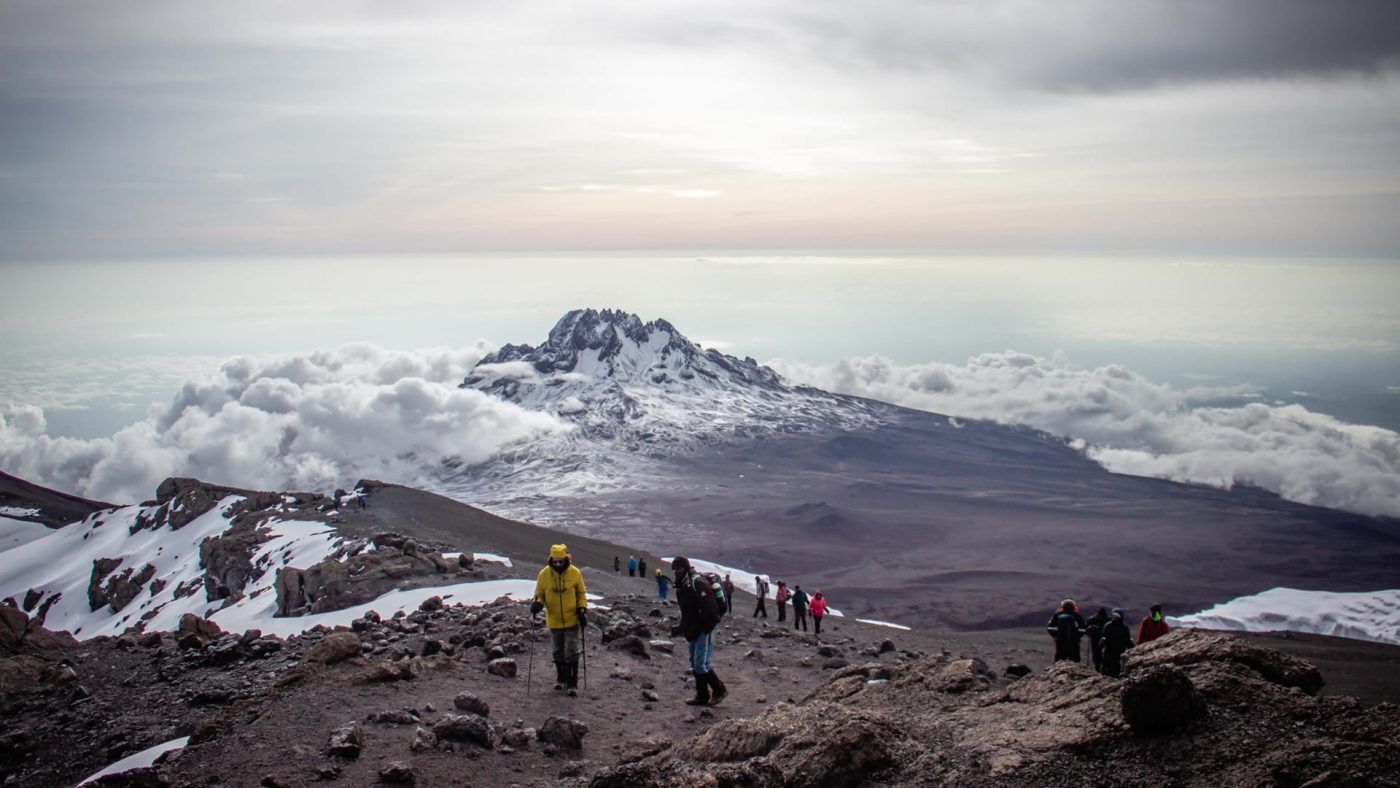 The period from December to February constitutes a dry season; nevertheless, early December experiences a brief wet season, with the dry season commencing in mid-December. This is an opportune moment to ascend Mount Kilimanjaro and Mount Rwenzori, as the trails are neither slippery nor difficult to navigate. It is important to acknowledge that nights and early mornings are cold, and the weather might change unexpectedly.
The period from March to May constitutes the extended rainy season, rendering it the least favorable time for hiking on Rwenzori and Kilimanjaro. This period is inadvisable due to substantial rainfall, damp and treacherous hiking paths, and severe snowfall. Hiking in the rain is less pleasurable, and one also forgoes the magnificent vistas that could be experienced during the rainy season. The most advantageous aspect of trekking in this season is the less crowds and increased affordability.
The Full Moon is seen as an opportune period for hiking, particularly as one approaches the summit of Mount Kilimanjaro. The illuminated glaciers on the mountain and the trail enhance the visibility for the trekkers.
In conclusion, Kilimanjaro and Rwenzori are commendable safari places; to ascertain which is superior, one must visit both to make an informed judgment. Given our extensive knowledge, we recommend visiting both summits to acquire insights from each.