
Tarangire National Park
Situated in Tanzania’s Manyara Region, roughly 120 kilometers from Arusha, Tarangire National Park is a repository of wildlife and natural splendor. Tarangire National Park, the sixth largest park in Tanzania, encompasses approximately 2,600 square kilometers and is an essential site for wildlife enthusiasts. The park’s distinctive terrain, varied fauna, and profound cultural legacy render it a perfect site for a safari expedition.
The park’s name originates from the Tarangire River, which traverses the park and acts as the principal source of fresh water for wildlife throughout the annual dry season. The river serves as the essential artery of the park, and its existence is what renders Tarangire National Park distinctive. The Tarangire River is an essential element of the park’s ecosystem, sustaining a diverse array of flora and fauna.
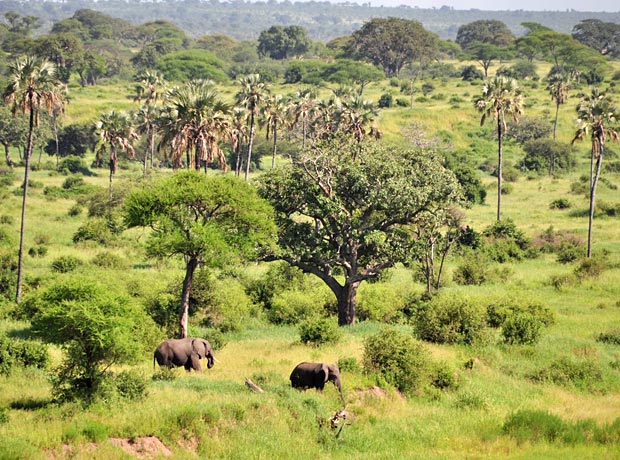
Tarangire National Park is Renowned for Elephants, Migration, and Baobabs
Tarangire National Park is famous for its substantial elephant populations, the minor animal movement, and the magnificent baobab trees. The park hosts eight species of baobab trees, including the renowned African baobab, which can attain heights of up to 11 meters and a circumference of 34 meters. The baobabs are remarkable, characterized by their distinctive shape and lofty trunks. These trees symbolize the park’s natural beauty and are essential to the environment, offering shade, sustenance, and refuge for numerous creatures.
A Sanctuary for Bird Watching
Tarangire National Park serves as a sanctuary for ornithologists, boasting more than 300 documented avian species. The park’s diverse terrain, featuring grand baobabs, illuminated termite mounds, and expansive grassy savannas, serves as a habitat for numerous avian species. Prominent avian species present in the park comprise the ostrich, the secretary bird, and the kori bustard. The avian population of the park is a significant draw for visitors, with optimal viewing occurring in the dry season when foliage is less dense.t
Wildlife Viewing and Scenery
The park’s topography features rugged hills and a meandering river frequented by various animals for hydration. The winding Tarangire River divides the park into two, and its existence is what renders the park distinctive. The southern section of the park is less congested, offering visitors a chance to immerse themselves in the genuine African ambiance of Tanzania’s rural landscape. The park’s terrain features several rocky outcrops, hills, and valleys, creating a habitat for diverse wildlife.
Best Time for Visit Tarangire National Park
The dry season is the optimal period to visit Tarangire National Park, as animals gather along the Tarangire River, offering an excellent opportunity to observe abundant species in a single location. This is an optimal moment to observe the predator-prey dynamic in operation. The dry season, occurring from June to October, is optimal for game watching due to reduced foliage density and increased animal concentration near the river.
Watch the Big Five
Tarangire National Park is an exceptional venue for observing the Big Five African game, rendering it suitable for brief excursions, including one-day and two-day tours. Visitors can partake in a brief excursion to the park at economical prices while still experiencing the excitement of observing the coveted African Big Five. The Big Five—lion, leopard, elephant, buffalo, and rhinoceros—serve as a significant draw for visitors, and the park’s guides possess expertise and experience in tracking these species.
Directions to Tarangire National Park, Tanzania
The bulk of visitors to Tarangire often participate as part of an extended safari program. Tarangire National Park is a component of the popular Northern Safari Circuit in Tanzania and is primarily visited in conjunction with other parks, including Ngorongoro Crater and Serengeti National Park. Typically, the majority of safaris on this route commence in Arusha city. The most advisable method to access Arusha town is to fly into Kilimanjaro International Airport (KIA), situated roughly 46 kilometers or 29 miles from Arusha. One can directly fly into Julius Nyerere International Airport (DAR), located near the capital city of Dar es Salaam, and subsequently transfer to Arusha Airport (ARK).
An alternate cost-effective option is to book an economical flight to Nairobi, Kenya’s capital, and subsequently utilize a shuttle bus to reach the town of Arusha. You will be collected early in the morning and will ultimately arrive in Arusha at 4 PM. Your tour operator often greets you at the airport and subsequently coordinates all further logistics, including the charter aircraft to the park according to your arrangements.
While charter flights are available from Arusha and Serengeti National Park to Tarangire, one can experience an exhilarating two-hour drive from Arusha to the park entry, with only the final seven kilometers being unpaved. Another advantageous aspect is the ease of connectivity from this location to many northern national parks, including Lake Manyara and the expansive Ngorongoro Conservation Area.
Elephants in Tarangire National Park
Referred to as Oldome in the Maa language of the Maasai, and as Tembo or Ndovu in Swahili, elephants (Loxodonta africana) are the renowned residents of Tarangire National Park. Elephants can frequently be observed in significant numbers here, resembling enormous battleships navigating across the park. Elephants are highly intelligent beings that reside in closely bonded familial groups. The eldest and largest females lead this familial unit, which may encompass multiple generations of elephants. Upon reaching maturity (about thirteen years of age), all males will depart from their female companions—sisters, mothers, and grandmothers—to live independently or in transient all-male herds. Should you encounter a threat while observing a herd of elephants, it is probable that the assailant will be an older female safeguarding her familial group. Elephants are generally gentle, particularly in their interactions with close family members. They exhibit intelligence, loyalty, and form robust connections with each other.
Fully mature male elephants often do not interact with familial groups, except during the estrus period of a female, who is then pursued by multiple male suitors and often copulates with several of them. Occasional altercations may arise amongst the competitors, though they rarely result in significant harm. Upon the conclusion of her estrus, the female’s association with the mature male elephants ceases abruptly.
Even the most formidable predators typically avoid adult elephants. The sole exception is to infants; being merely 80 cm in height at birth, these vulnerable beings would be prime targets for lions were it not for the robust protection afforded by their families. Upon the initial sign of peril, elephants will congregate and position the calves at the center of the adult group. In response to the threat, the herd will either withdraw or the largest matriarch will display behavior intended to scare the invader. During the exhibition, the exhibiting elephant will extend her ears broadly and oscillate her head violently from side to side. Occasionally, a feigned charge will ensue, accompanied by resounding trumpeting. This strategy is typically effective, as few natural phenomena are as scary as a big, enraged, charging elephant.
Elephants occasionally recline to rest, although the notion of “elephant graveyards” is unfounded.
Regions adjacent to the riverbanks, where the water has diminished, provide optimal vantage points to witness elephants excavating for hydration in the sandy substrate, where the water table is situated just beneath the surface. Elephants and other animals appear to favor the clean, cool water obtained from digging over the hot, muddy water that has gathered on the surface. The excavation commences with the forefeet scraping the loose sand; but, once the cavity begins to take shape, the trunk is further employed as a digging implement. Despite their goal of obtaining a refreshing drink, elephants frequently appear to engage in this behavior playfully, exhibiting a spectacle of water splashing and coating themselves in mud. Elephants appear to be the sole species possessing the requisite intelligence and size to execute such excavations, although other animals have adapted to exploit them. Remarkably, adult elephants consume between 90 and 140 liters of water daily.