
Where is Mount Kilimanjaro located
Where is Mount Kilimanjaro located, All of us attended geography classes in school. It is frequently necessary to identify a certain geographic feature on a contour map. Should you inquire of individuals to identify the renowned Mount Kilimanjaro, just a minority would respond accurately. Frequently, the estimated site is situated in either Kenya or Tanzania.
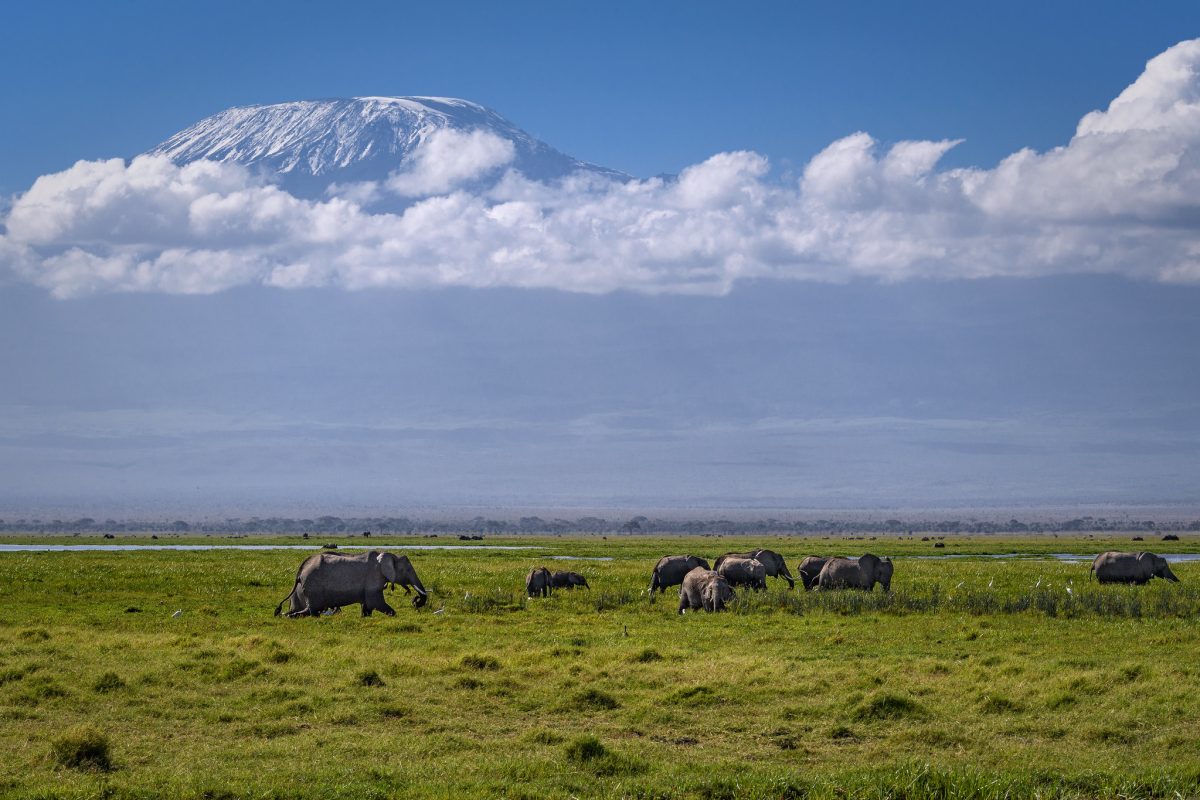 Two perspectives on Kilimanjaro
What is the reason for the ongoing confusion? The most spectacular view of the mountain is from Amboseli National Park. This perspective may be regarded as iconic. You observe the mountain from a plain inhabited by elephants. One frame encompasses both the largest terrestrial mammals and the highest peak in Africa. This perspective has been documented in thousands of images, recorded by many cameras, and included in countless documentaries.
Disney’s iconic animated film “The Lion King” starts with visuals of the sun ascending over the African savannah. A herd of elephants strides gracefully through the morning fog. The snow-capped summit of Africa’s tallest mountain looms over the landscape.
In Tanzania, it is not unusual to observe depictions of Kilimanjaro from the vantage point of Kenya. This does not imply that Tanzania lacks spectacular vistas of the majestic mountain. Numerous such perspectives exist! However, there are no national parks adjacent to Kilimanjaro in Tanzania that permit elephants to graze freely. That constitutes the primary distinction.
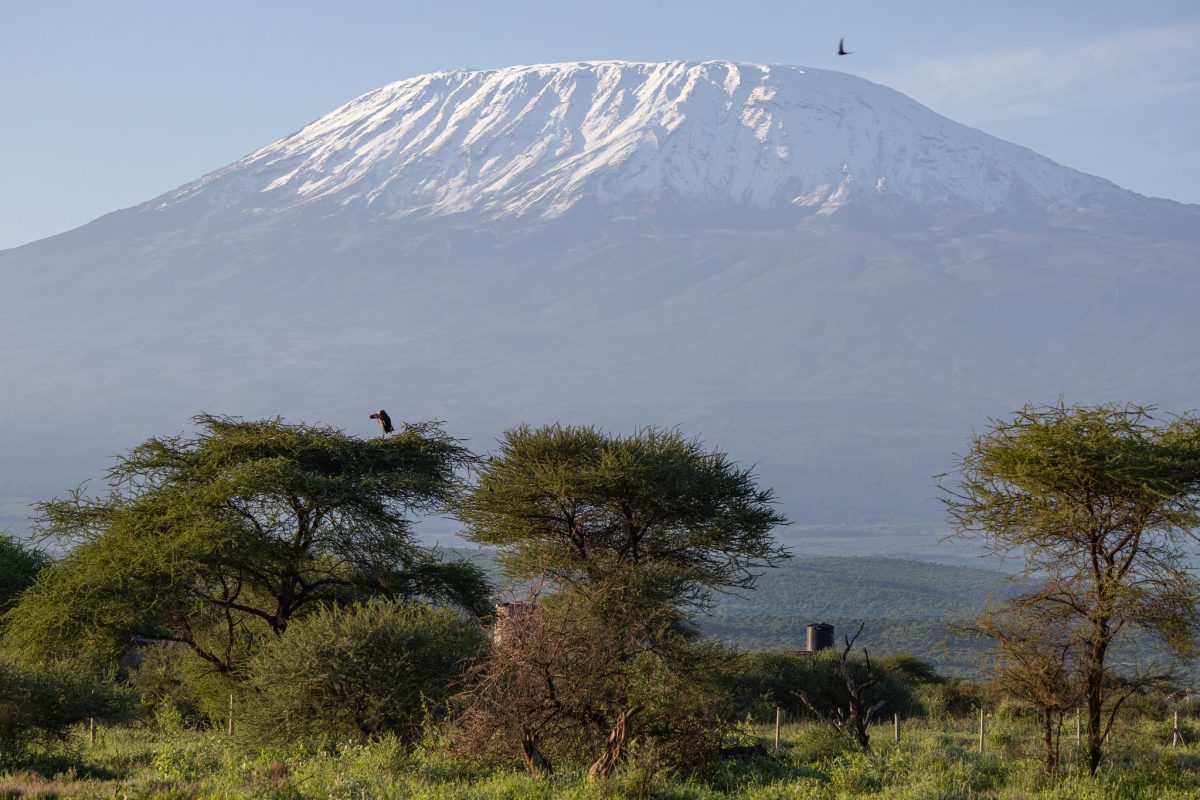
Geographical coordinates of Kilimanjaro
Mount Kilimanjaro has consistently been situated in Tanzania. This territory, known as Tanganyika, was previously governed by foreign powers, initially Germany and subsequently Britain. Nonetheless, territorial conflicts existed between the adjacent nations of Kenya and Tanzania. The primary focus was on the territories next to the northern flank of Kilimanjaro. The International Court of the UN resolved the issues in favor of Tanzania in 1982. Simultaneously, the mountain has consistently belonged to Tanzania, with Kenya never asserting ownership over it. This is readily apparent when examining any map of Mount Kilimanjaro.
To resolve the issue, it is sufficient to provide the coordinates of Kilimanjaro. Coordinates: 3°04′ S, 37°21′ E.
The highest peak in Africa is situated near the equator, as indicated by its latitude. It is situated merely 3° or 340 kilometers (211 miles) to the south. The equator traverses the northernly positioned Kenya. In the town of Nanyuki, adjacent to Mount Kenya, a marker indicates the location of the equatorial line.
To facilitate comparison, let us examine the coordinates of the boundary between Kenya and Tanzania. The coordinates of a location north of Kilimanjaro near the Tarakea border post in Tanzania are 2°59′ S, 37°34′ E. Consequently, the boundary between the two nations is situated nearer to the equator than Mount Kilimanjaro. This detailed geographic analysis dispels any doubts, even among skeptics. The tallest peak in Africa is situated in Tanzania and is entirely within its borders.
Map and Address of Mount Kilimanjaro
The precise location of the renowned mountain is: Africa, United Republic of Tanzania, Kilimanjaro Region, Moshi Rural, Hai, and Rombo districts. Mount Kilimanjaro is wholly situated within the eponymous national park. The closest city is Moshi, situated on its southern slopes. Additionally, in close proximity, about 60 kilometers (37 miles) distant, lies the city of Arusha, recognized as the tourist center of Tanzania. The closest airport is Kilimanjaro International Airport (JRO).
Upon identifying Kilimanjaro on the map, we recommend examining the detailed depiction of the mountain more closely. Examine this post featuring Kilimanjaro maps to discover the intriguing aspects of Africa’s tallest mountain, the pathways to its peak, and other captivating characteristics.
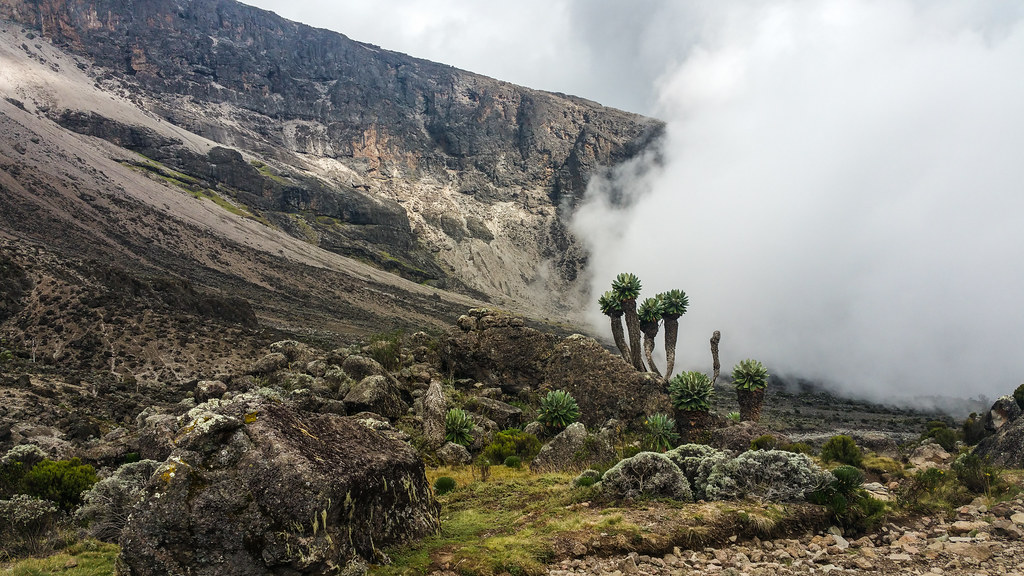
What distinguishes Kilimanjaro?
Kilimanjaro is not merely Africa’s highest summit, including glaciers in proximity to the equator. It is renowned as one of the Seven Summits, being the highest peak in Africa. It is renowned as the highest free-standing peak globally. The title is engraved on a plaque at the apex of Kibo peak. What is the true significance of this title?
Tallest free-standing mountain
The majority of mountains constitute extensive chains, often known as mountain ranges. They occur when tectonic plates collide. This results in significant portions of the Earth’s crust elevating. The Himalayas and the Andes are arguably the two most renowned examples.
Approximately 25 million years ago, the Somali plate commenced its separation from the African plate. Consequently, the Great Rift Valley in Africa commenced its formation. The rifting caused breaches in the Earth’s crust and led to the birth of several volcanoes. One of these evolved into Mount Kilimanjaro, characterized by its three unique volcanic cones. The summits or volcanic cones are referred to as Kibo, Mawenzi, and Shira. Mount Meru, discernible from Uhuru Peak, is its “junior counterpart”.
The surrounding plains exhibit a significant elevation variation of 4,500 meters (about 14,764 feet) within a span of 45 kilometers (around 28 miles). This remarkable elevation establishes Kilimanjaro as the highest free-standing mountain in the planet. The closest notable volcanic mountain is Mount Meru in Tanzania. It is situated roughly 70 kilometers (nearly 43.5 miles) to the southwest. Mount Kenya, a notable dormant volcano, is situated 300 kilometers (about 186 miles) to the north. Kilimanjaro mountain rises to an elevation of 5,895 meters (19,341 feet) above sea level.
Is it indeed the tallest free-standing peak globally?
Kilimanjaro is the highest freestanding mountain on Earth. Nevertheless, upon examining underwater, it becomes evident that the title of the Earth’s tallest solitary mountain is attributed to Mauna Kea in Hawaii. Its elevation surpasses 10,000 meters (about 32,808 feet) from its base. For numerous kilometers in all directions, there are no other summits. Nevertheless, just 4,207 meters (about 13,803 feet) of Mauna Kea are elevated above sea level. Remarkably, similar to Kilimanjaro, Mauna Kea is likewise a volcano.
Mount Kilimanjaro is a stratovolcano.
It is, more precisely, a complex of three volcanoes. More than two million years ago, a fissure in the African plate compromised the uppermost layer of the Earth’s crust. This facilitated the eruption of the molten substance. The inaugural volcano was designated as Shira. It expelled magma and created a distinctive rock formation, rising above the savannah.
One million years later, subterranean activity expelled additional molten lava during a significant eruption west of the Shira volcano. This led to the formation of the second volcano, Mawenzi, which experienced two eruptions.
Subsequently, after a further half a million years, the third and tallest volcano, Kibo, arose between them. The vigorous eruptions and molten lava obliterated the initial Shira volcano. The walls of the former fell, leaving only a diminutive edifice on the southern side known as Cathedral Peak. The majority of Shira’s previous crater has been transformed into a level expanse. The Shira Plateau provides a breathtaking vista of the youngest Kibo volcano. The most recent significant eruption formed Kilimanjaro as it exists today.
Shira and Mawenzi have become inactive and are classified as extinct volcanoes. Nevertheless, the young Kibo is categorized as inactive. Local legends indicate that its most recent eruption transpired approximately 300 years ago, circa the 1700s. Fumaroles, from which jets of hot gasses discharge, remain in the Reusch Crater’s inner cone. This location exhibits indications of volcanic activity and features an ash pit. Occasionally, the odor of sulfuric gas permeates Uhuru Peak, situated on the external rim of the crater
Glaciers and snow cover
The colossal volcano is known for its magnificent ice crown. The early European explorers were astonished to discover snow and ice formations in proximity to the equator. Occasionally, its summit is covered with a white layer of snow. This frequently occurs during the rainy seasons. Annually, there are two intervals during which snowfall transpires at elevated altitudes in this region. The prolonged rainy season occurs from March to June. Subsequently, the brief precipitation period in November. We previously observed Kilimanjaro’s summit through satellite for an entire year. Examine our photographic report to observe the annual snow accumulation on Kibo cone.
Regrettably, global climate change is rapidly diminishing the ice coverage on Kilimanjaro. This impacts not only the center cone or the rim of Kibo’s crater, but the entire mountain. This issue is a worry for conservationists, the Tanzania National Parks Authority, and all potential climbers. The glaciers in this region are expected to vanish entirely within a few decades.
Five climate regions
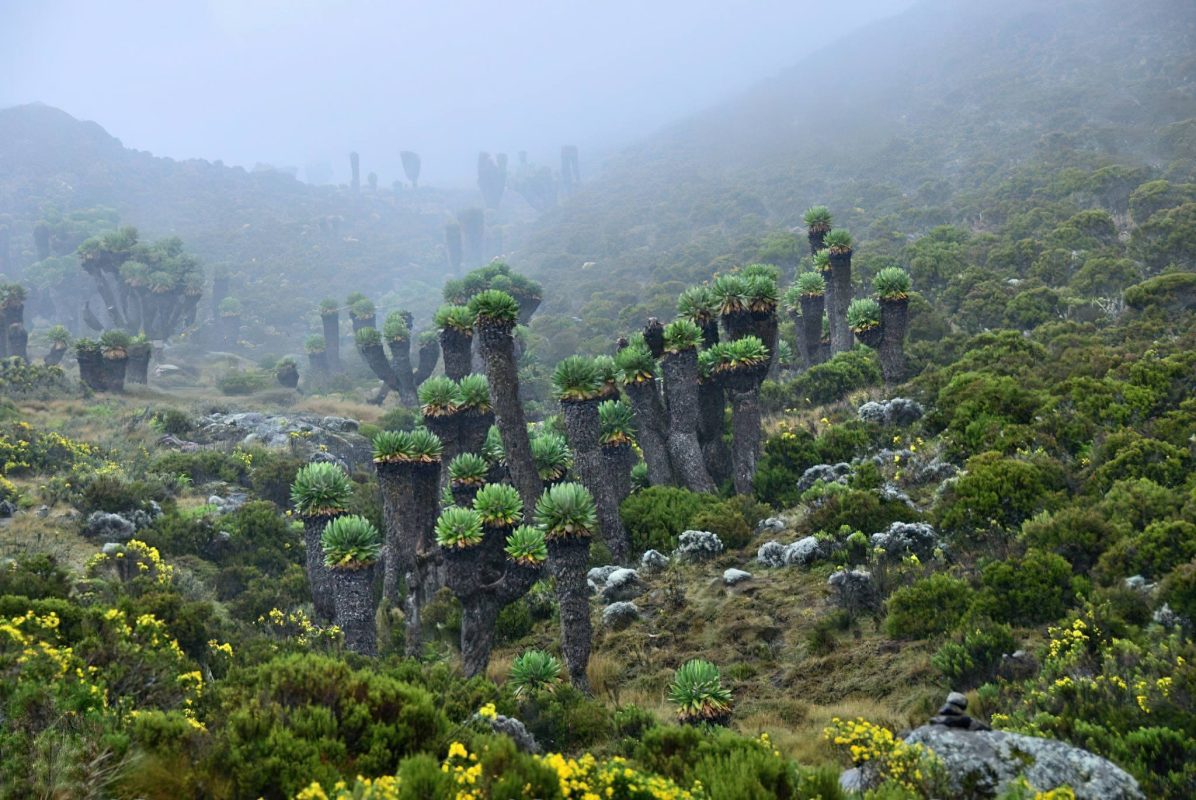
Kilimanjaro’s remarkable altitude results in a variety of climate zones. Each of them cultivates unique habitats. Although its foundation is situated in equatorial forest regions, its summit attains elevations where temperatures can freeze water.
The slopes of Kilimanjaro are often divided into five separate zones. These zones are distinguished by their specific temperature ranges and precipitation patterns. Consequently, each zone has distinct flora and animals.