
Mount Kenya vs Mount Kilimanjaro | Which African Mountain Should You Climb?
Mount Kenya and Kilimanjaro are two of the most renowned and stunning mountains in Africa. The two tallest peaks on the continent provide formidable and gratifying experiences for adventurers and trekkers. This essay will examine the similarities and differences between the two mountains, assisting you in determining which one is suitable for your next expedition.
Geographical Position and Reachability:
Mount Kenya is situated in central Kenya, approximately 150 kilometers north of Nairobi. It is readily accessible from the capital city and may be reached by either road or air. Kilimanjaro is located in Tanzania, immediately south of the equator.
The location is roughly 300 kilometers from Arusha and may be reached through Kilimanjaro International Airport or by road.
Height and Difficulty: Mount Kilimanjaro reaches an elevation of 5,895 meters, establishing it as the tallest mountain in Africa. It is the highest freestanding peak globally. Conversely, Mount Kenya comprises three principal summits, the tallest of which, Batian, reaches an elevation of 5,199 meters.
Kilimanjaro is frequently regarded as a less technical ascent in comparison to Mount Kenya. Both mountains necessitate a substantial amount of endurance and stamina, along with the capacity to adapt to elevated altitudes
Climate and Topography:
Both mountains are situated near the equator, resulting in analogous temperatures and terrains. Both are categorized as tropical mountain climates, characterized by decreasing temperatures with elevation.
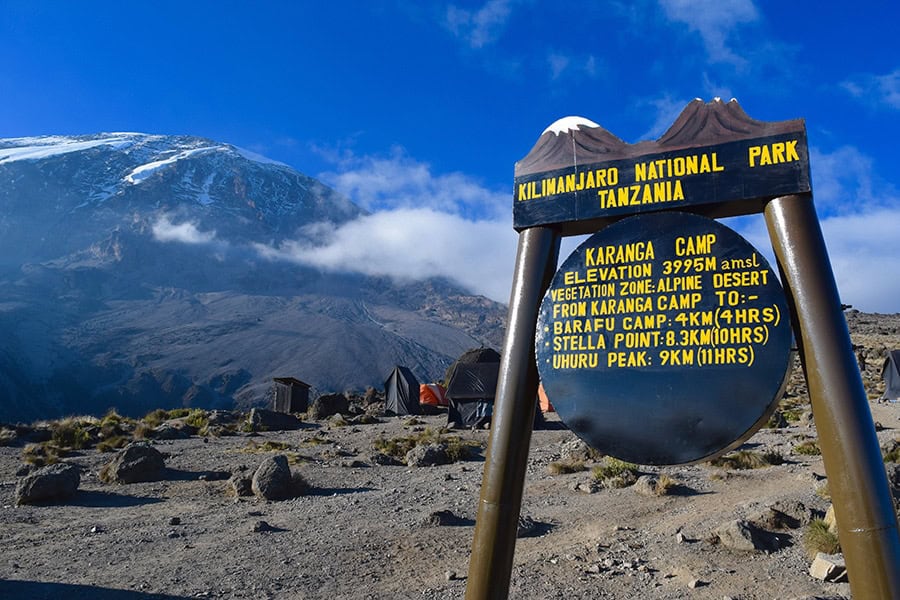
The peak of Kilimanjaro remains perpetually enveloped in snow and glaciers, but the glaciers of Mount Kenya have been diminishing in recent years. The topography of Kilimanjaro is rather uniform, featuring a clearly marked trail and gentle inclines.
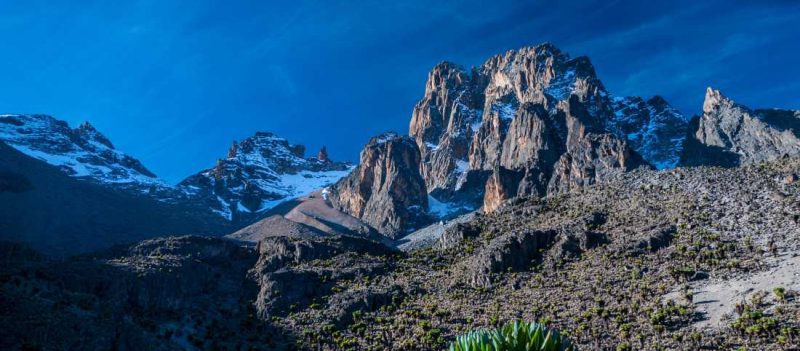
Mount Kenya has a more arduous and varied landscape, characterized by rugged summits, precipitous inclines, and an amalgamation of snow and ice.
 Wildlife and Landscape:
Kilimanjaro is located in Kilimanjaro National Park, which has diverse species including elephants, leopards, and monkeys. The lower slopes of Mount Kenya are encompassed inside a national park, whilst the upper slopes are classified as a wilderness area.
Both mountains provide breathtaking vistas and natural scenery, with Kilimanjaro presenting the emblematic sight of its snow-covered summit towering over the savannah. Mount Kenya, conversely, presents a more difficult and secluded terrain, featuring stunning vistas of the adjacent valleys and summits.
Kilimanjaro features multiple renowned routes to its peak. They are as follows:
- Marangu route — Known as the “Coca-Cola” route, it is the most frequented and accessible path.
- Machame route — Referred to as the “Whiskey” route, it has greater challenges than Marangu while providing more picturesque vistas.
- The Lemosho route, one of the lengthier paths, is regarded for its elevated success rate in achieving the summit.
- The Rongai route commences in the north and provides a more secluded and less congested pathway to the peak.
Mount Kenya features several ways to the summit, including:
- The Naro Moru route is recognized as the most expedient and direct path, characterized by its steep incline and stunning vistas.
- Sirimon route – This route commences from the west and is regarded as less congested and more picturesque than alternative routes.
- The Chogoria route is the longest and most varied path, offering breathtaking beautiful vistas, although it is also the most arduous.
 Accommodation:
Both mountains provide lodging alternatives for trekkers, ranging from rudimentary campsites to alpine lodges. Trekkers on Kilimanjaro generally utilize tents or reside in mountain cottages along the trails. Trekkers on Mount Kenya can opt for either camping or accommodation in traditional mountain cottages.
How long is each hike to the top?
The duration of the ascent to the peak of Mount Kilimanjaro varies by route and can range from 5 to 9 days. The typical length for the ascent to the peak of Mount Kenya ranges from 4 to 6 days, contingent upon the selected route. It is often a more brief and arduous ascent in comparison to Kilimanjaro.
Cost Discrepancy: The expense associated with ascending either mountain can fluctuate significantly based on variables such as the chosen route, duration of the expedition, and the extent of assistance and equipment supplied by the trip operator.
Climbing Mount Kenya is typically more economical than Kilimanjaro, with costs commencing at approximately $1,000 for a five-day ascent. The expense of a Kilimanjaro expedition might vary from $2000 to $6000 per individual.
Crowds and busy season:
Both mountains draw a significant number of climbers annually, particularly during the peak seasons from June to October and December to February.
Kilimanjaro attracts a significant influx of trekkers, ranging from 30,000 to 50,000 annually, resulting in considerable congestion on certain routes. Conversely, Mount Kenya is less frequented and attracts fewer trekkers, resulting in a more tranquil and isolated experience.
Conclusion:
Mount Kenya and Kilimanjaro provide distinctive and unforgettable experiences for individuals pursuing a demanding and gratifying trek. Although Kilimanjaro is taller and more renowned, Mount Kenya provides a more varied and technically challenging ascent.
The decision between the two mountains ultimately hinges on individual preferences and capabilities. Regardless of your choice, both options will provide you with indelible memories and a profound sense of achievement upon reaching their summits.